Are you tired of the noise, the gas cans, and the constant maintenance of a standard mower? You’ve probably looked at a manual reel mower because they promise a ‘golf course’ finish and a peaceful Sunday morning. But before you spend your money, you need to know if it’s a practical choice for a real yard or just a good way to get a backache.
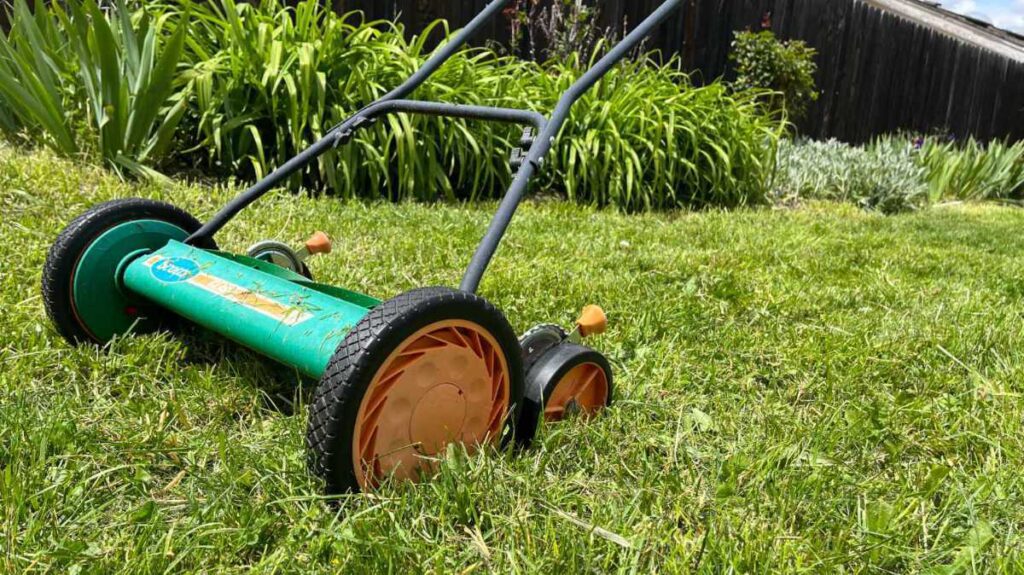
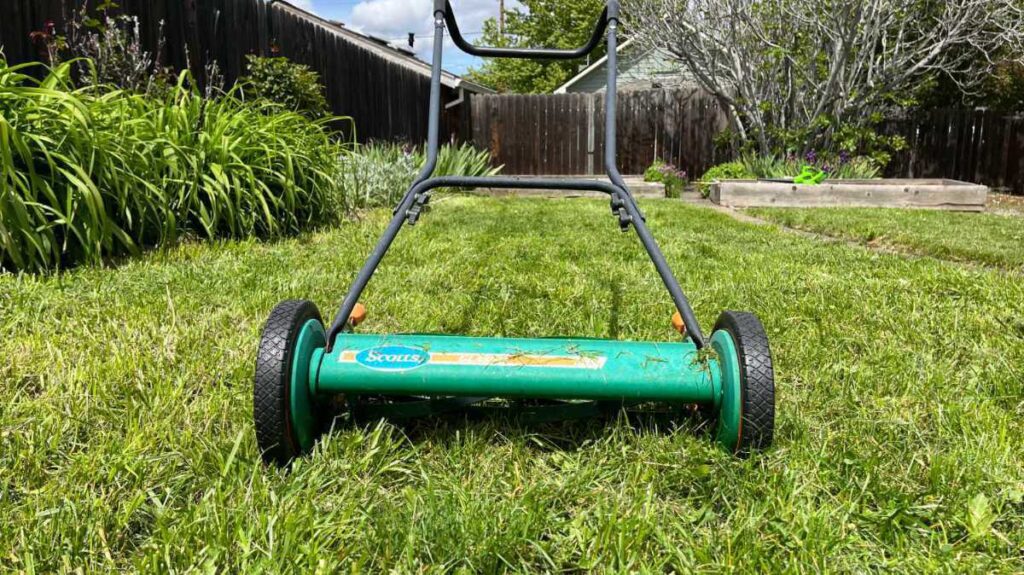
I depend on my tools to run a successful business, and I’m always dissecting new gear to see what’s actually worth the investment. I spent a significant amount of time testing the Scotts 20-Inch Classic Reel Mower on residential lawns to see if I could offer it as a specialized “Green Service” for my clients. While I ultimately decided it wasn’t the right fit for my professional trailer, I learned exactly who this mower is for—and who should stay far away from it.
The Scissor-Cut: Why Your Grass Prefers a Reel
The biggest reason homeowners consider these is the health of the lawn. Most mowers use a rotary blade that spins at high speeds to essentially whack the top off your grass. This leaves jagged, torn edges that turn brown and invite disease.
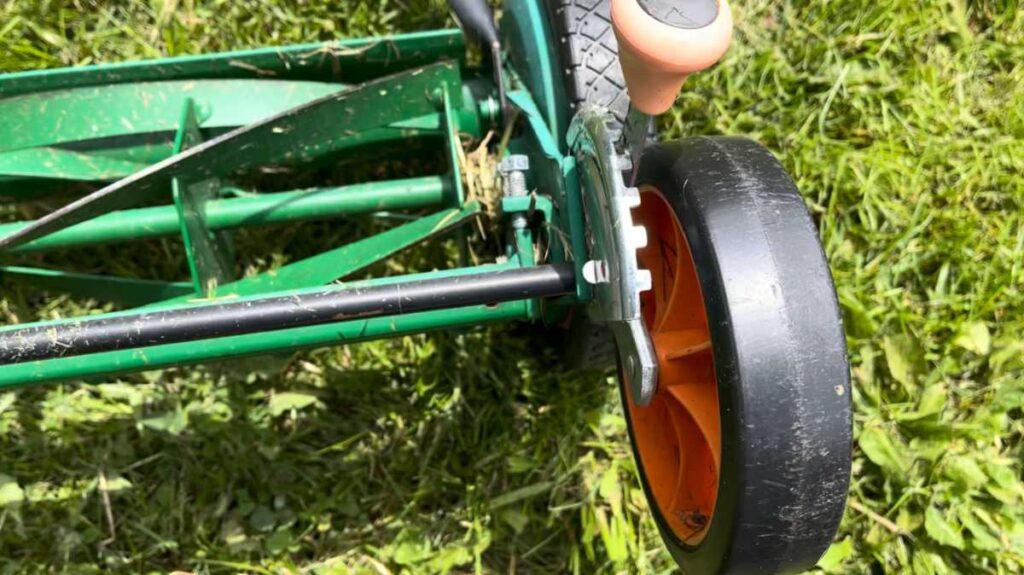
A reel mower works like a pair of scissors. It has blades that spin vertically against a stationary bar, creating a clean, sharp slice.
This clean cut helps your lawn:
- Heal Faster: The grass recovers quickly from a slice vs. a tear.
- Stay Greener: You won’t see those brown, frayed tips after a mow.
- Retain Moisture: Clean cuts bleed less water, which is huge in the summer heat.
Watch the Field Test
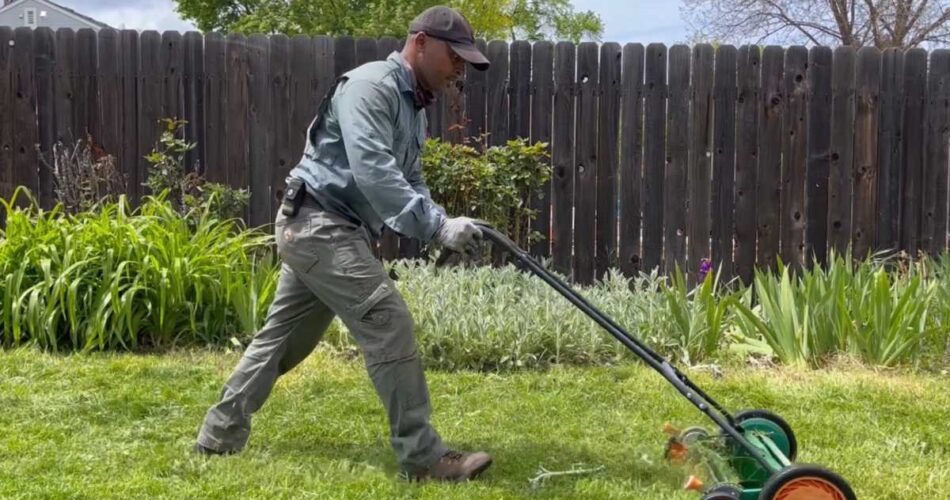
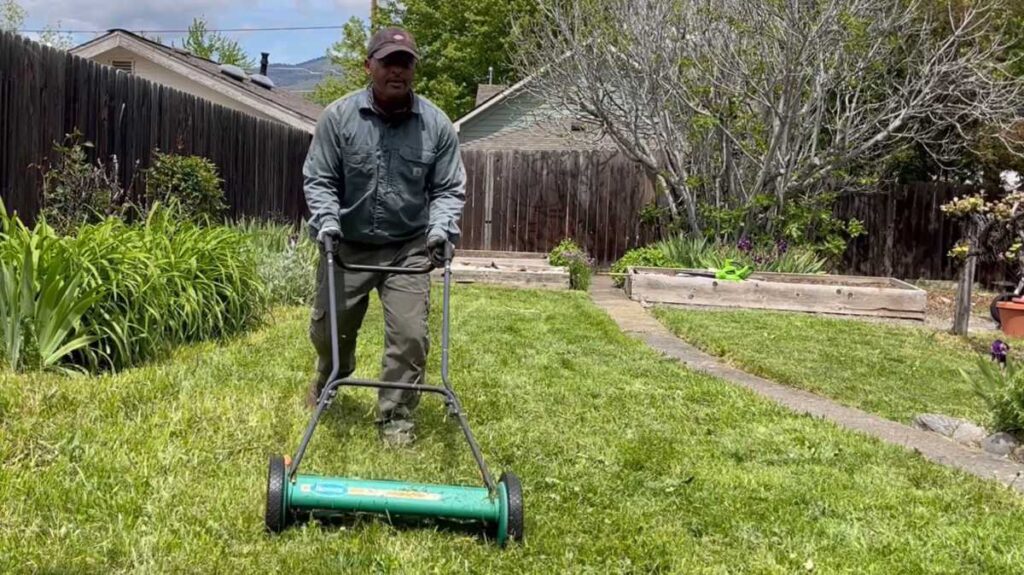
I put together a video of me testing this mower on a typical residential lawn. You can see the technique I used and hear just how quiet it is compared to a gas engine.
What I Learned Testing This for My Business
I really wanted to make a “Silent Mow” service work for my early-morning clients. But after putting it to work, I realized it just isn’t a cost-effective tool for a professional setup.
- The Time Factor: It took me much longer to finish a yard with this than with my cordless battery gear.
- The Debris Problem: One small twig or a pebble stops the blades dead. Having to stop and clear a jam every few minutes is a major headache.
- The Growth Window: If the grass grows even an inch too tall, the reel mower just pushes it over instead of cutting it. I can’t show up to a client’s house and tell them I can’t mow because the grass grew too much.
I’ve decided to stick with my battery-powered equipment for my professional work, but those “downsides” might actually be “upsides” for your home.
Is it Right for Your Home?
If you have a relatively flat yard under 5,000 square feet, the reel mower is a solid choice. The best part? Zero maintenance. You don’t have to mess with oil, spark plugs, or even charging a battery. You just grab it and go.
If you’re looking to get some extra exercise and enjoy a peaceful mow where you can actually hear the birds or listen to a podcast, this is a win.
Common Mistakes New Owners Make
- Don’t “Bull” Through Debris: If you hit a stick, stop. Forcing it can nick the blades.
- Avoid Mowing Wet Grass: A reel mower will just get gummed up.
- The Overlap Rule: Since there’s no suction to pull the grass up, you need to overlap your passes by about 2-3 inches to avoid leaving “mohawks” of uncut grass.
The Final Verdict
If you have a small yard and can commit to mowing every 3 or 4 days, a reel mower is a great, peaceful way to get a professional-looking lawn. But if you have a big property or a busy schedule where you can only mow once a week, you’re better off with a battery-powered rotary mower.