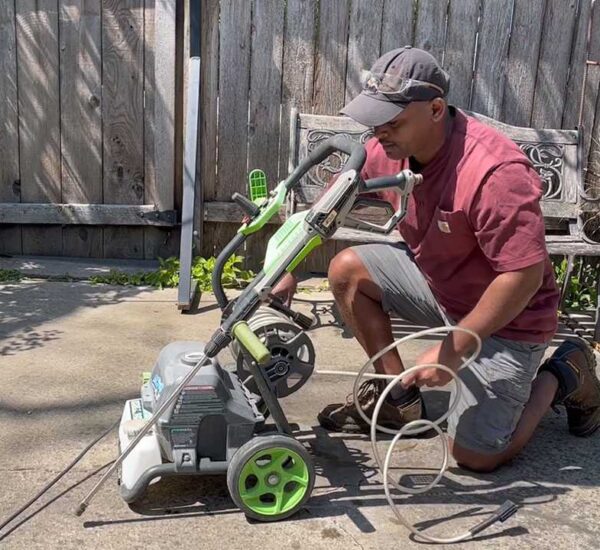
Finding a high-quality tool at a fraction of its retail price is a highlight for any DIY enthusiast. About three years back, I was browsing Facebook Marketplace and came across a Greenworks 2000 PSI Pressure Washer. I cannot recall the exact final price, but I knew it was a fantastic deal from someone likely clearing out their garage.
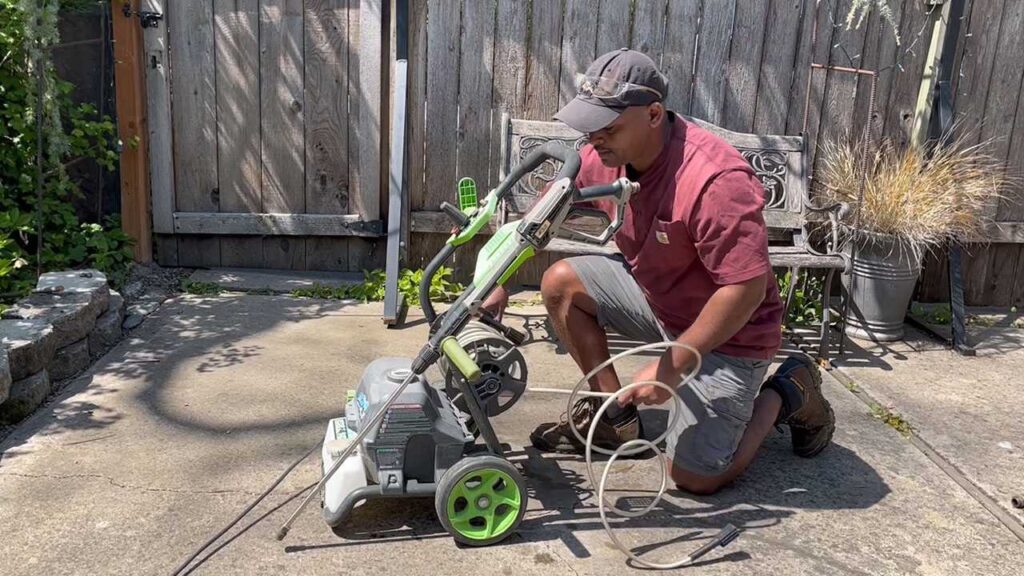
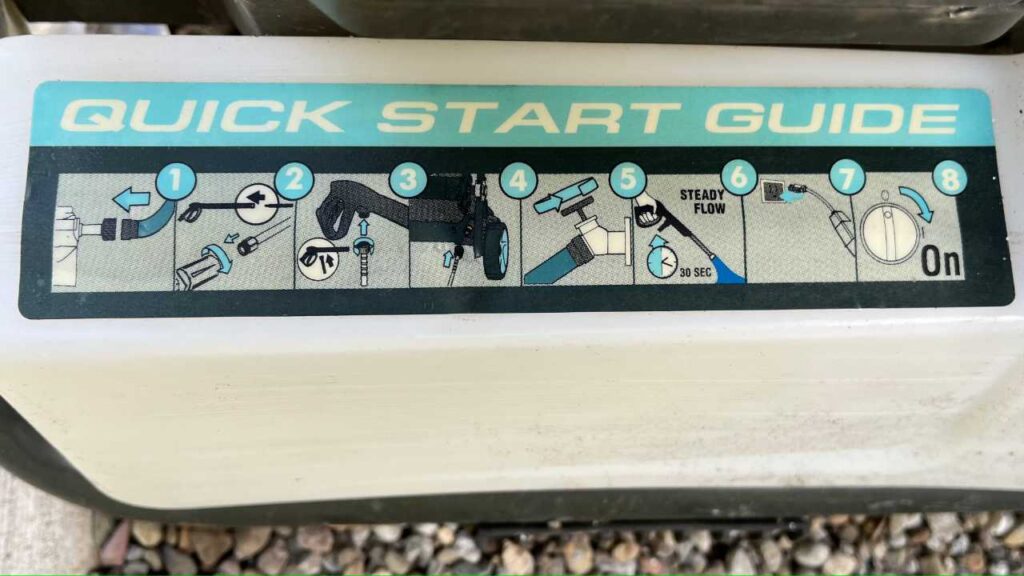
When I picked up the unit, it didn’t come with an instruction manual. For some tools, this would be a major headache, but the Greenworks GPW2000 is designed with the user in mind. Right on the front of the frame, there is a clearly diagrammed Quick Start Guide. Within minutes, I had the water source connected and the unit powered up without having to search for a PDF online.
Decoding the Specs: Why PSI and GPM Matter
When you start looking at pressure washers, you are hit with a lot of jargon. The two numbers that define your cleaning experience are PSI and GPM. Understanding these is the secret to choosing the right tool for your specific projects.
PSI (Pounds per Square Inch) represents the “stripping power” of the water. This is the force that blasts away caked-on mud or peeling paint. At 2000 PSI, this Greenworks model sits in the “medium-duty” category. It has enough muscle to handle a dirty driveway but is gentle enough for siding if used correctly.
GPM (Gallons per Minute) is the flow rate. While PSI loosens the dirt, GPM is what actually washes it away. Higher GPM means you can clean a larger area in less time. This unit typically operates around 1.1 to 1.2 GPM, which is standard for a residential electric motor.+1
The combination of these two numbers gives you the Total Cleaning Units. When comparing machines, do not just look at the highest PSI; look for a balance that allows you to work efficiently.
The Electric Advantage: Noise and Maintenance
My only previous experience with pressure washing was using a gas-powered unit at a customer’s house. From what I remember, that machine was incredibly loud and required a fair amount of “fiddling” to get started. I initially thought moving to a corded electric version like the GPW2000 would eliminate noise entirely.
Well, I quickly found out that “electric” does not mean silent. While it lacks the aggressive roar of a 4-stroke gas engine, the pump still produces a significant mechanical hum. However, the major benefit here is the Total Stop System (TSS). The motor only runs when you pull the trigger. The moment you let go, the machine goes silent, which is a massive upgrade over gas units that idle loudly the entire time you are working.
Furthermore, the maintenance is nearly zero. You do not have to worry about mixing fuel, changing oil, or winterizing a complex carburetor. For an outdoor enthusiast who wants to spend more time traveling and less time turning wrenches, this is a huge plus.
Safety First: Don’t Wash in Flip-Flops
Warning! Pressure washing can be addicting, but seriously, you need to respect the power of the water stream. While it might be a hot day and you are tempted to wear flip-flops, I highly recommend strong, water-resistant boots.
A 2000 PSI stream can easily cut through skin or light footwear. Along with boots, you should always wear:
- Goggles or safety glasses to protect against flying debris.
- Ear protection for extended cleaning sessions.
- Work clothes that you do not mind getting soaked.
Prepare to get splashed! Even with a long wand, the back-spray from cleaning concrete or furniture will leave you damp by the end of the day.
Putting it to the Test: The Driveway and Patio
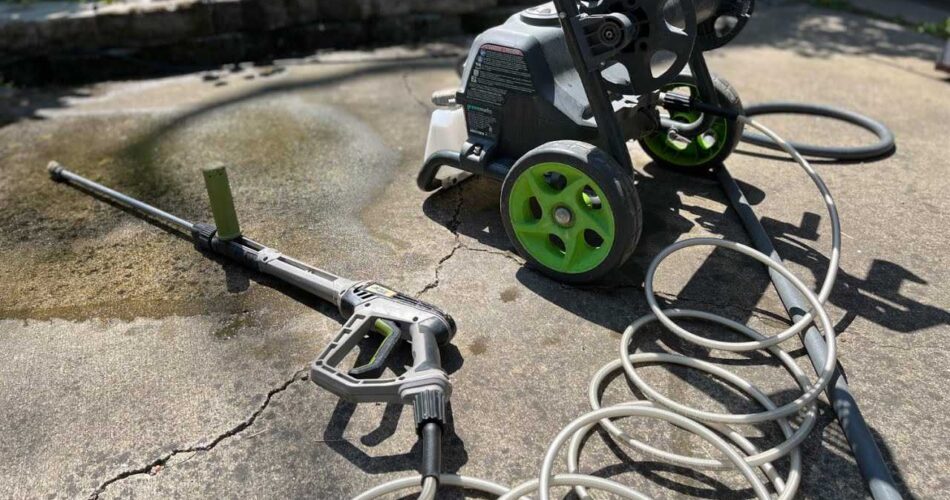
My primary goal for this unit was to renew an older concrete driveway. Over the years, it had developed a caked-on, moldy black appearance from constant exposure to the elements.
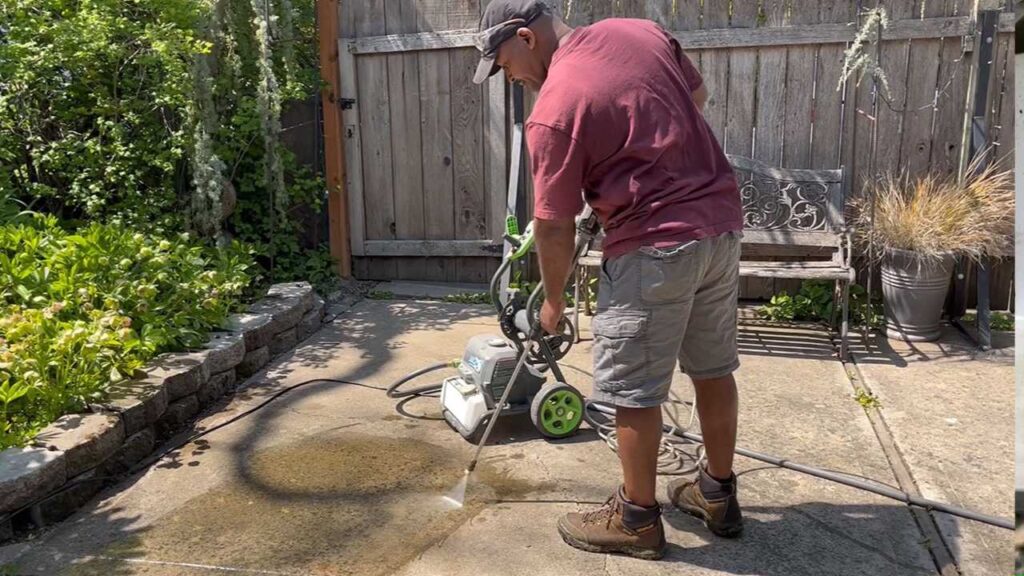
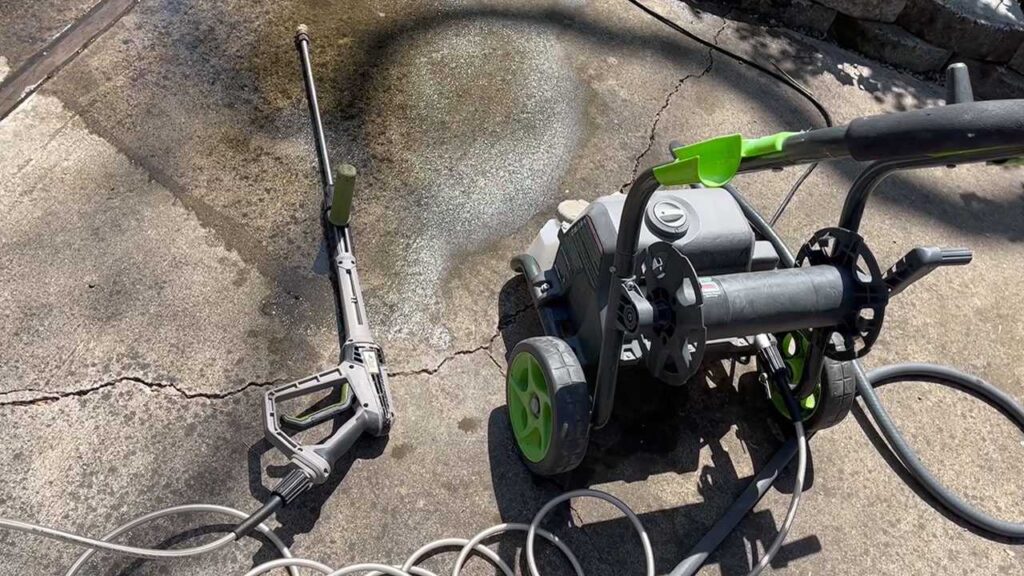
The GPW2000 performed admirably. While it was not quite powerful enough to make the concrete look “brand new” and spotless, the difference was significant. It stripped away the organic growth and revealed the original gray stone beneath. If you have deep oil stains, you might need a higher PSI unit or a chemical pre-treatment, but for general grime, this machine hits the sweet spot.
The process is incredibly satisfying because you get to see a side-by-side comparison in real-time. Once I finished the driveway, I moved on to my outdoor furniture.
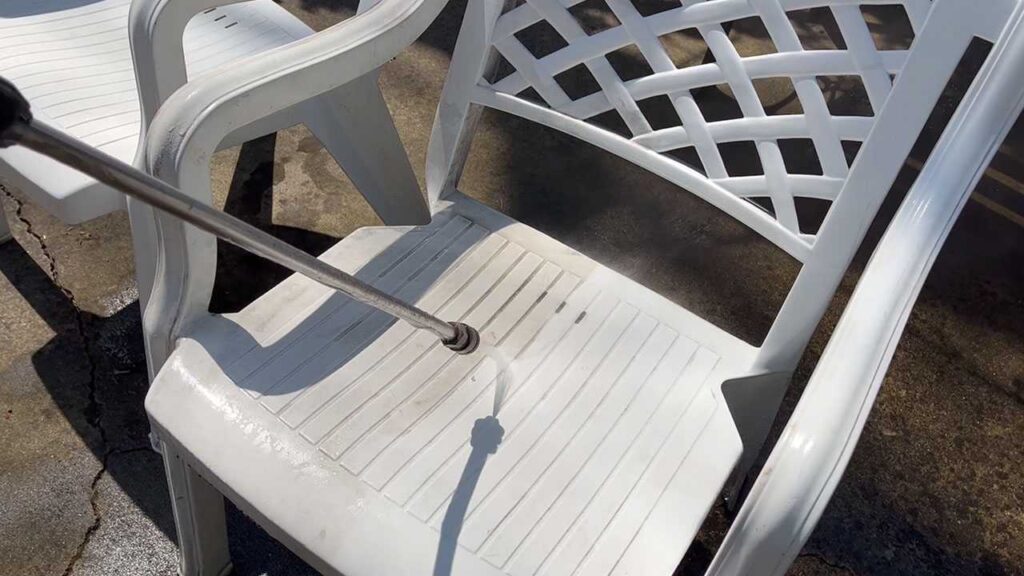
You can see the full breakdown of how I handled the furniture in my reference video below. It shows exactly how it performs on plastic and wood surfaces.
Drawbacks: The “Three-Cord” Struggle
If I had to pick a downside, it would be the cable management. Because this is a corded unit, you are essentially managing three different lines:
- The electrical power cord.
- The garden hose supply line.
- The high-pressure hose leading to the wand.
These can easily become a tangled mess if you are not paying attention. I found that working in a “S” pattern and moving the unit frequently helps prevent the hoses from kinking. It requires a bit more situational awareness than a gas unit, but for the convenience of not dealing with fuel, it’s a trade-off I am willing to make.
Check the current price on Amazon
Long-Term Reliability: 3 Years Later
Having owned this unit for three years now, I can speak to its longevity. Often, budget-friendly electric pressure washers fail after a single season because of pump seals drying out or plastic components cracking.
The GPW2000 has held up remarkably well. I make sure to drain the water completely before storing it for the winter, and it has fired up every single spring without hesitation. The heavy-duty steel frame has also protected the motor from the occasional bump or drop during transport.
Conclusion: Is the GPW2000 Right For You?
If you are looking for a machine to do heavy-duty industrial cleaning, you should consider a more powerful gas unit. However, if you are like me and just want to keep your patio furniture, vehicles, and walkways looking sharp, the Greenworks 2000 PSI model is a winner.
It is lightweight, stores away easily in a small corner of the garage, and provides enough power for 90 percent of residential tasks. Finding one used was a bonus, but even at retail price, the lack of maintenance and ease of use make it a solid investment for any homeowner.