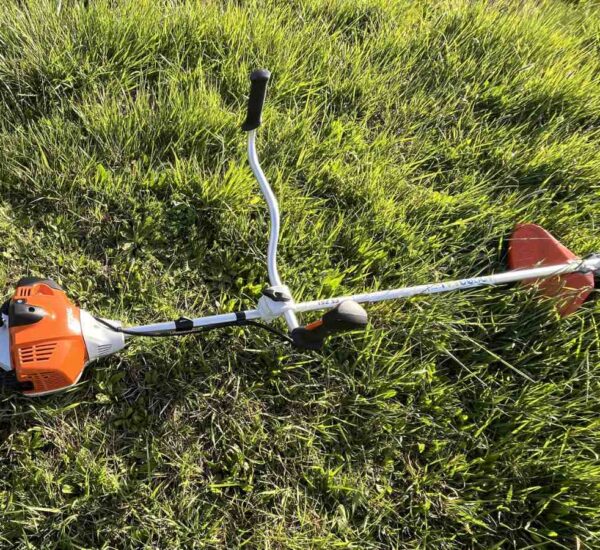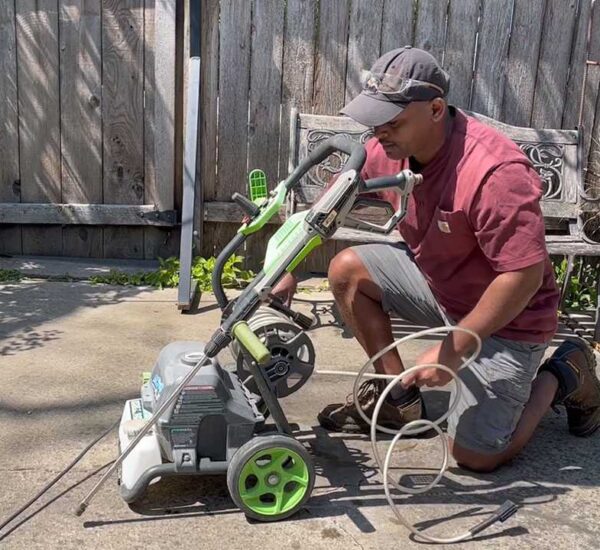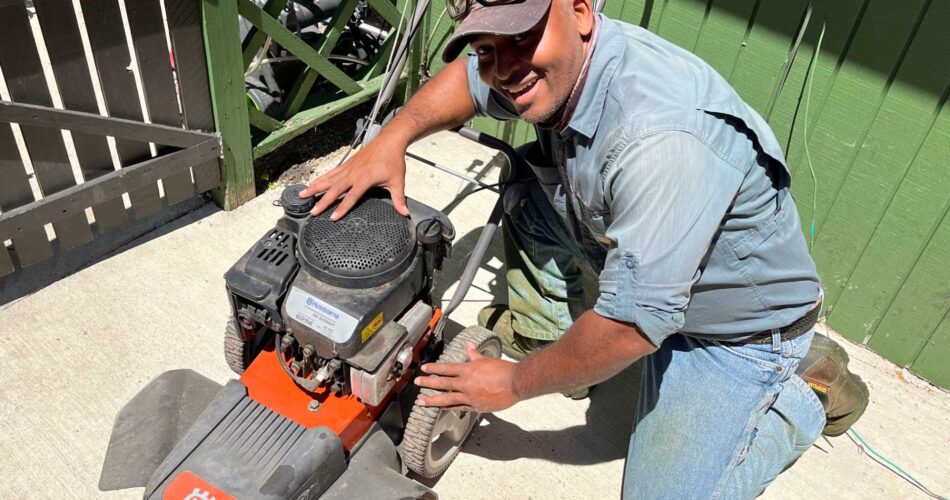
A few years back, a customer gifted me a Husqvarna wheeled string trimmer. I was genuinely excited because I had been eyeing a “DR Trimmer” style machine for quite a while. These walk-behind units are essentially a hybrid between a traditional lawn mower and a heavy-duty weed eater. Since a massive portion of my outdoor jobs involved clearing thick brush and heavy weed-eating, I thought this would be the ultimate productivity booster.
Bringing the Beast Back to Life
When I first received the unit, it was not in running order. While many people might feel frustrated by a piece of equipment that won’t start, I actually enjoy the challenge. There is a specific kind of satisfaction that comes from a successful carb rebuild and hearing an engine roar back to life.
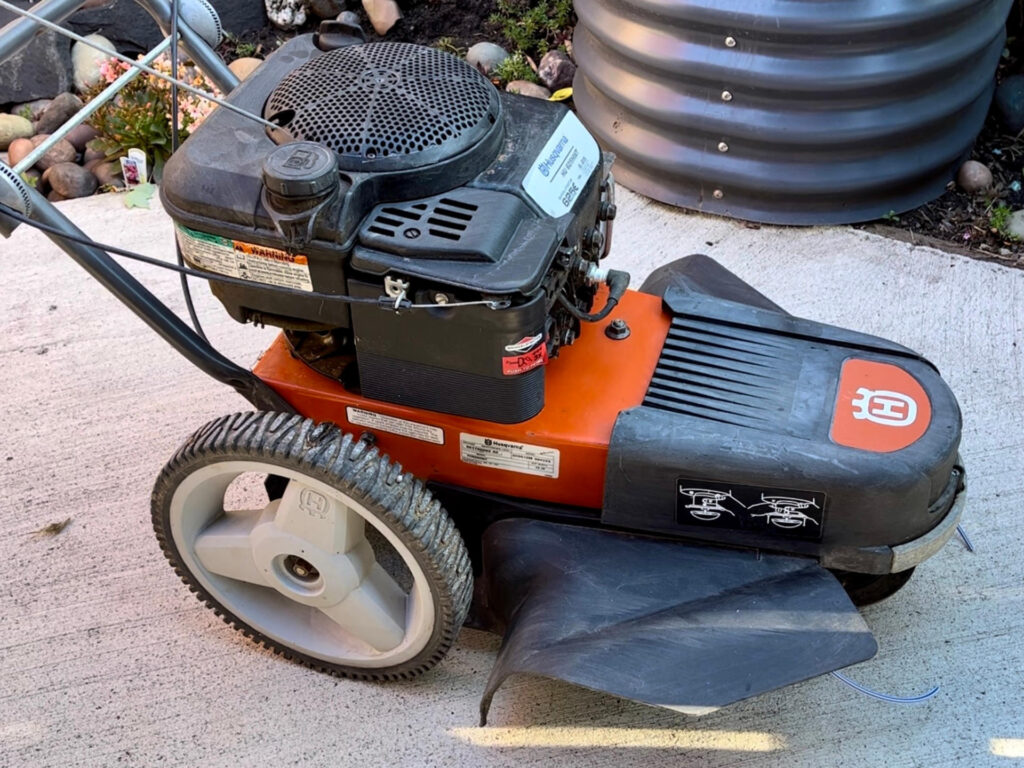
The engine on this model is a Briggs & Stratton 625ex Series. These are reliable workhorses, but like any small engine, they don’t like sitting with old fuel. I tore down the carburetor, cleaned out the gunk, and did a full rebuild. It didn’t take long before it was running like a brand-new machine.
You can watch the full step-by-step process of that rebuild here:
Husqvarna HU625HWT: The Technical Breakdown
If you are considering a machine like this, the specifications tell a big part of the story. This isn’t a delicate tool; it is built for the rough stuff.
- Engine: Briggs & Stratton 625ex Series (190cc)
- Torque: 6.25 foot-pounds of gross torque
- Cutting Width: 22 inches
- Line Diameter: .155 inch (Heavy-duty industrial grade)
- Wheels: 12-inch high rear wheels
- Drive: Manual push
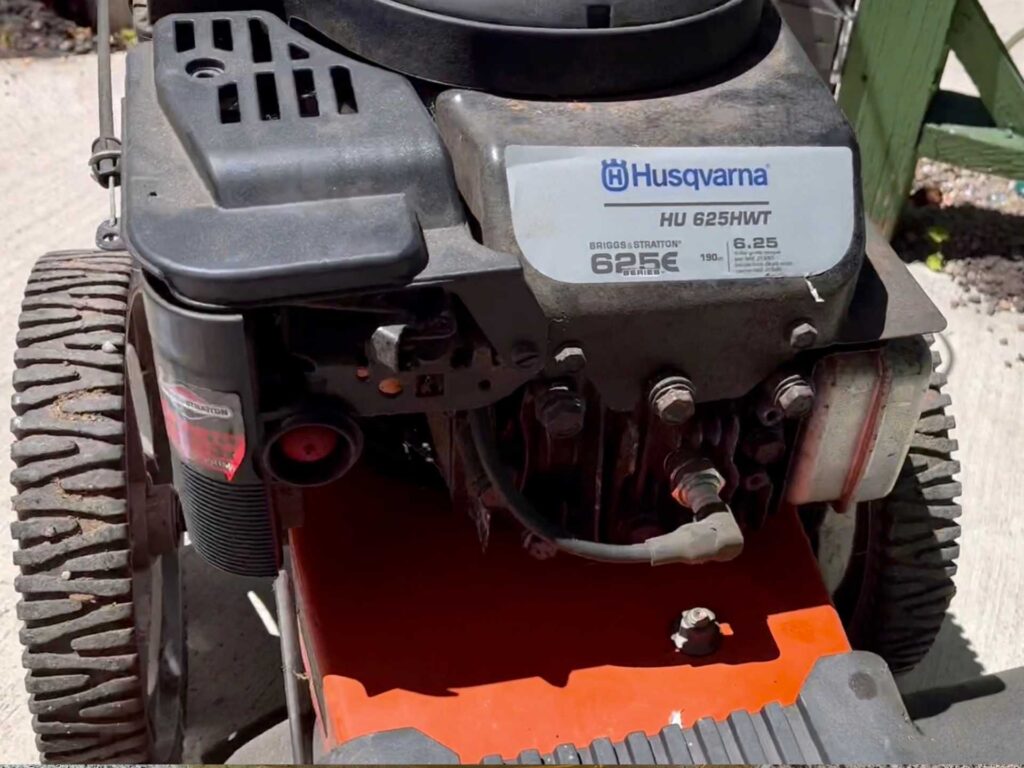
The real magic here is the engine displacement. A standard handheld trimmer usually features a small engine, often between 25cc and 30cc. This Husqvarna boasts a 190cc four-cycle engine. That is a massive jump in power. Because it is a four-cycle, you don’t have to worry about mixing gas and oil, and you get significantly more torque. When you are attacking thick, woody weeds or tall, wet grass, this engine has the muscle to keep spinning where a handheld unit would simply stall out.
Real World Performance: What It Is Like to Use
Once I had it in running order, I put it to work. You can see my very first time starting it up after the rebuild in this video: https://youtube.com/shorts/eUZkFhL47Zk?si=xWxTkCjRgVJOvrHU.
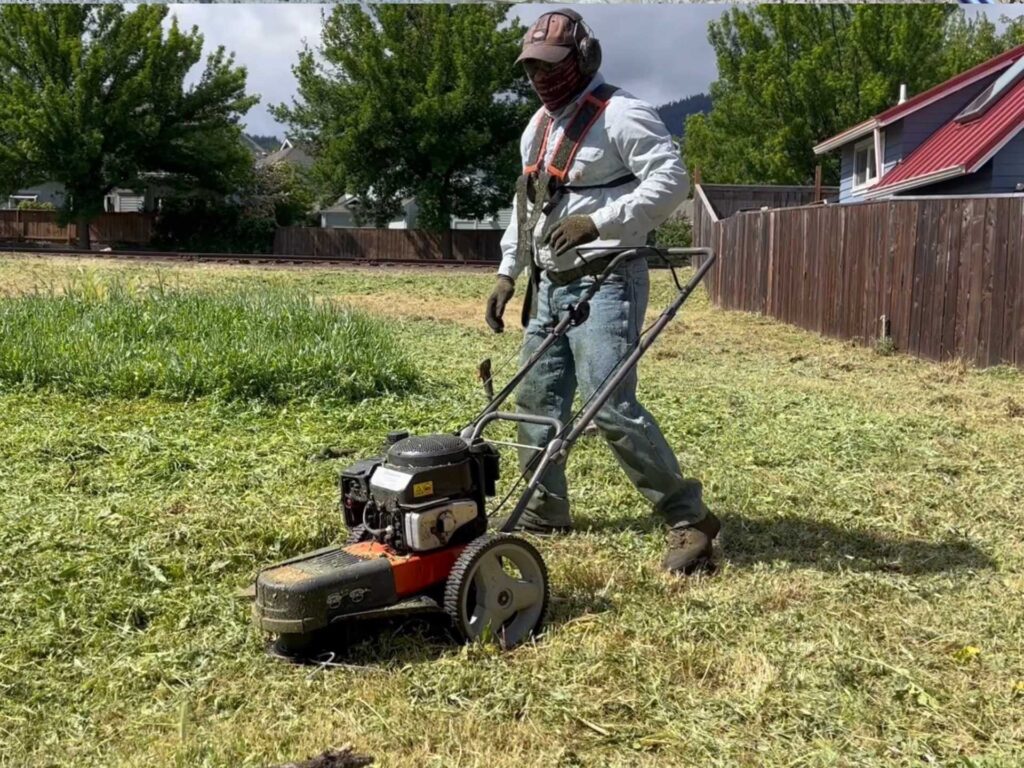
On flat ground, this machine is a monster. It clears a 22-inch path, which is nearly double what most handheld trimmers can manage. If you have a large, level field that has gotten out of control, this unit will save your back and shoulders. You aren’t carrying the weight; you are just pushing it along.
However, I quickly discovered that power comes with some trade-offs. While it is powerful, I found it extremely difficult to maneuver on sloped terrains. Because it is a manual push unit with a heavy engine, keeping it steady on a side-hill is a real workout. It also lacks the “surgical” precision of a handheld weed eater. Reaching into tight spots or trimming around delicate landscaping islands was a struggle because the front housing is fairly bulky.
Managing the .155 Trimmer Line
The line used on this machine is incredibly thick. At .155 inches, it is more like a plastic cable than a string. This is great for durability, but the system itself requires a bit of attention.
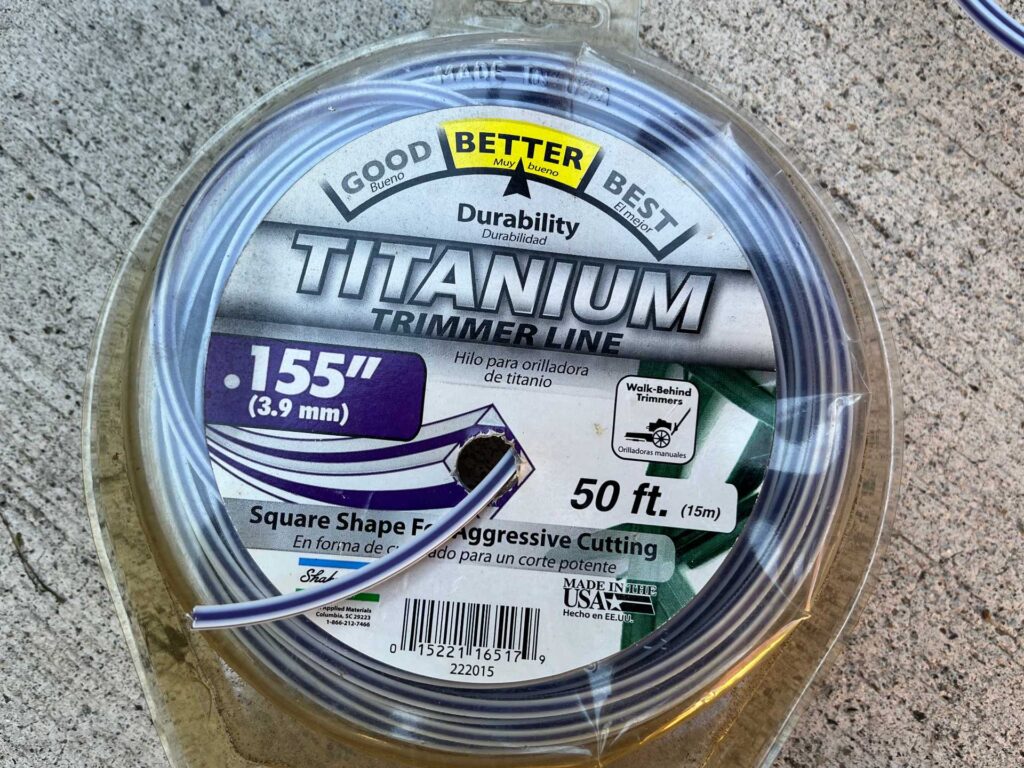
Unlike the “bump feed” heads found on most residential weed eaters, this wheeled trimmer requires you to stop and monitor the line length manually. There is no automatic feed. If you hit a hidden metal pipe or a jagged rock, the string will still wear down or snap.
I found that while you can buy pre-cut line options, it is much more cost-effective to buy a large reel of high-quality line and cut your own pieces. I kept a bundle of pre-cut strips in my pocket while working so I could swap them out quickly, though you do have to stop the engine or disengage the head to do so safely.
Check the current price on Amazon
Walk-Behind vs. Handheld Trimmer: The Comparison
If you are trying to decide which tool belongs in your shed, here is a quick breakdown of the differences.
Feature Walk-Behind (Wheeled) Handheld Trimmer Engine Power High (190cc) Moderate (25cc to 30cc) Cutting Path 22 Inches 12 to 16 Inches Terrain Best for flat ground Works on any slope Maneuverability Limited in tight spots Excellent precision Physical Effort Pushing weight Carrying weight
Why I Only Kept It for One Season
I used this Husqvarna for a small portion of the season before realizing it wasn’t the perfect fit for my specific needs. I found that I was constantly switching back to my handheld weed whacker to finish the jobs. With a handheld unit, I could keep moving regardless of the terrain and “feather the throttle” around sensitive areas.
The wheeled trimmer is a specialist tool. It does one thing very well: clearing large, flat areas of heavy brush. For my variety of jobs, the flexibility of the handheld trimmer was simply more efficient.
Initial Thoughts and Final Recommendation
So, should you buy a Husqvarna wheeled trimmer? It depends entirely on your property.
If you have several flat acres or a long, level fence line that needs constant maintenance, this machine is a life-saver. It removes the physical strain of carrying a heavy trimmer on your shoulder and provides enough power to clear almost anything in its path.
However, if your property is full of hills, tight corners, or intricate landscaping, you might find it more frustrating than helpful. It is a rugged, well-built machine that excels in the right environment. For me, it was a great project to bring back to life, and while I moved on from it, it remains a top-tier choice for the right landscape.