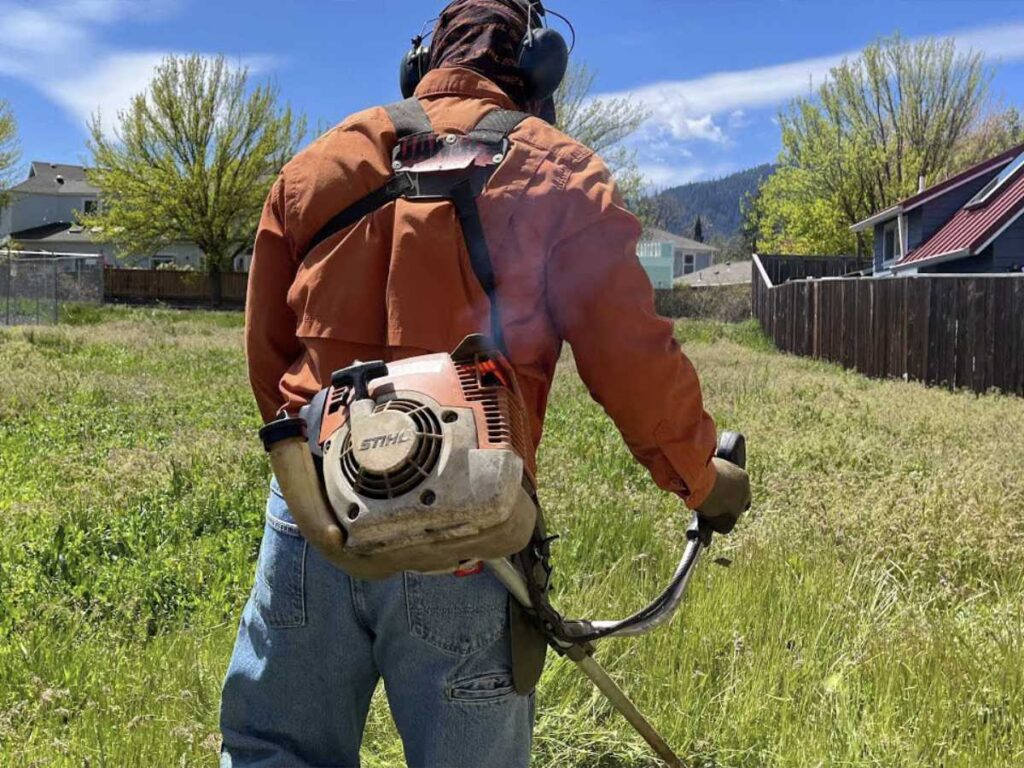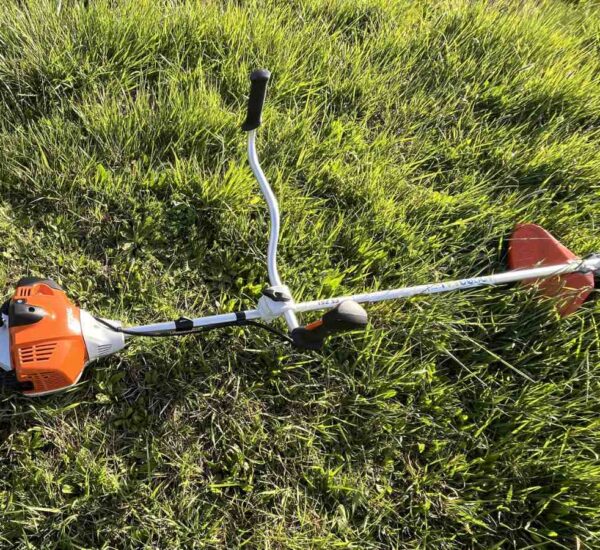
One of my favorite pastimes is searching for tools at a discount and taking on weekend projects like rebuilding or repairing small engines. My goal is always to add professional-grade gear to my arsenal without the retail price tag.
Spring is the perfect time for this. Most homeowners store their leaf blowers or weed whackers improperly over the winter, leaving ethanol-blended fuel to sit in the lines. When spring comes and the tool is “fidgety,” they’d rather get rid of it than deal with the costly bill and three-week wait time at a repair shop. That is where we come in.
The $50 Strategy: Knowing When to Buy
I have a specific thought process before I hand over any cash. I look for machines that appear barely used; if the housing isn’t beat up, the problem is usually a “chemistry” issue rather than a mechanical one. Gummed-up carburetors, old gas, and brittle fuel lines are the most common culprits.
The Golden Rule: My total investment—purchase price plus parts—should stay around $50 give or take. Most people just want the clutter gone, so I aim for a $30 average purchase price. Sometimes, you can even find these units for free on the curb or via online “free” groups.
The Case Study: A $30 Real-World Gamble
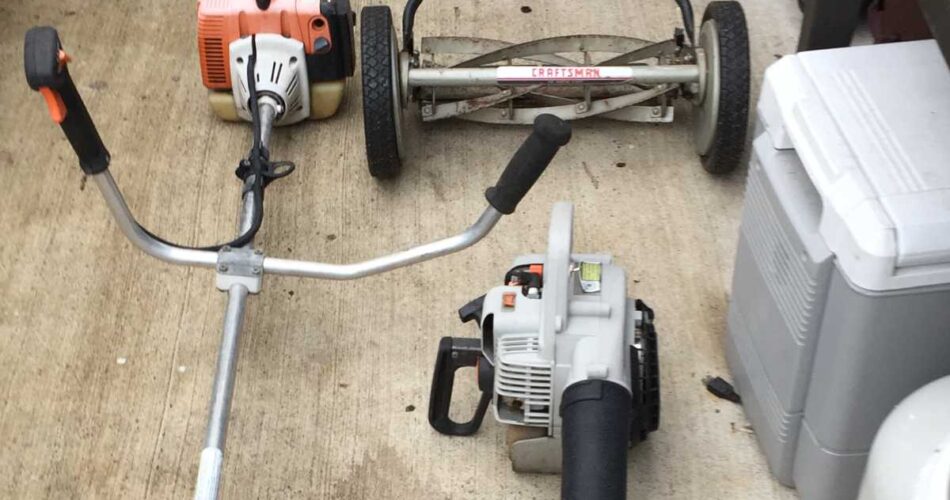
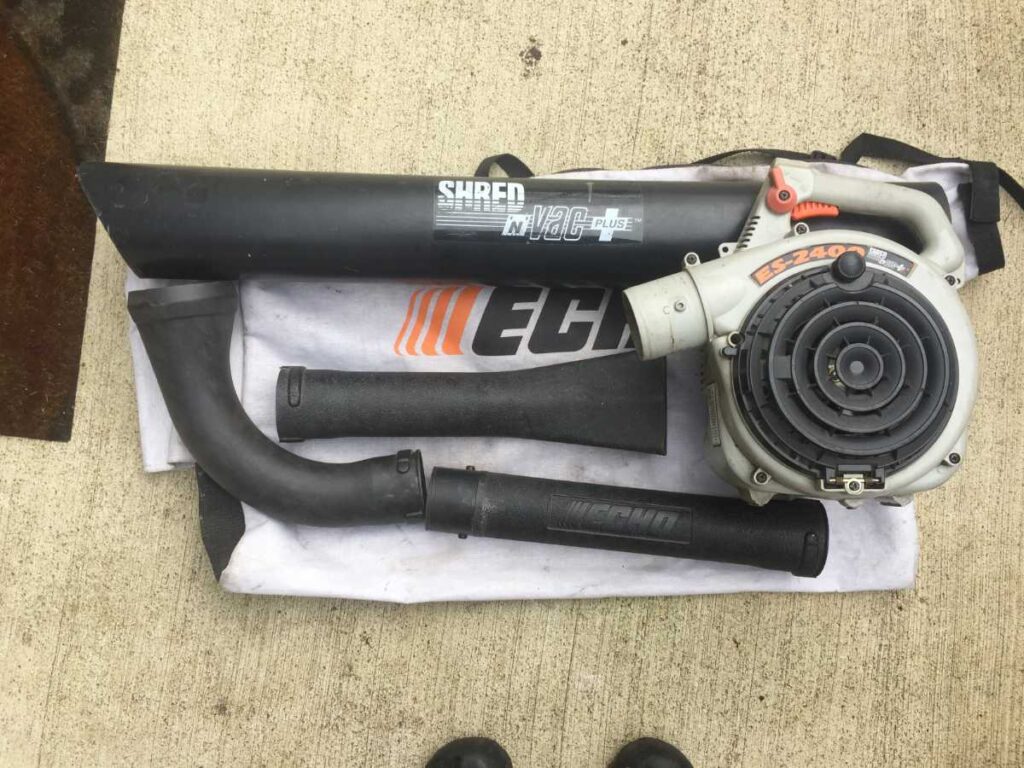
I recently purchased a bundle of three items online for $30 total. Because I bought them as a lot, I had to take the gamble without testing them first. My logic was simple: if I could get just one of these pro-grade tools running, it would cover the cost of the entire bundle.
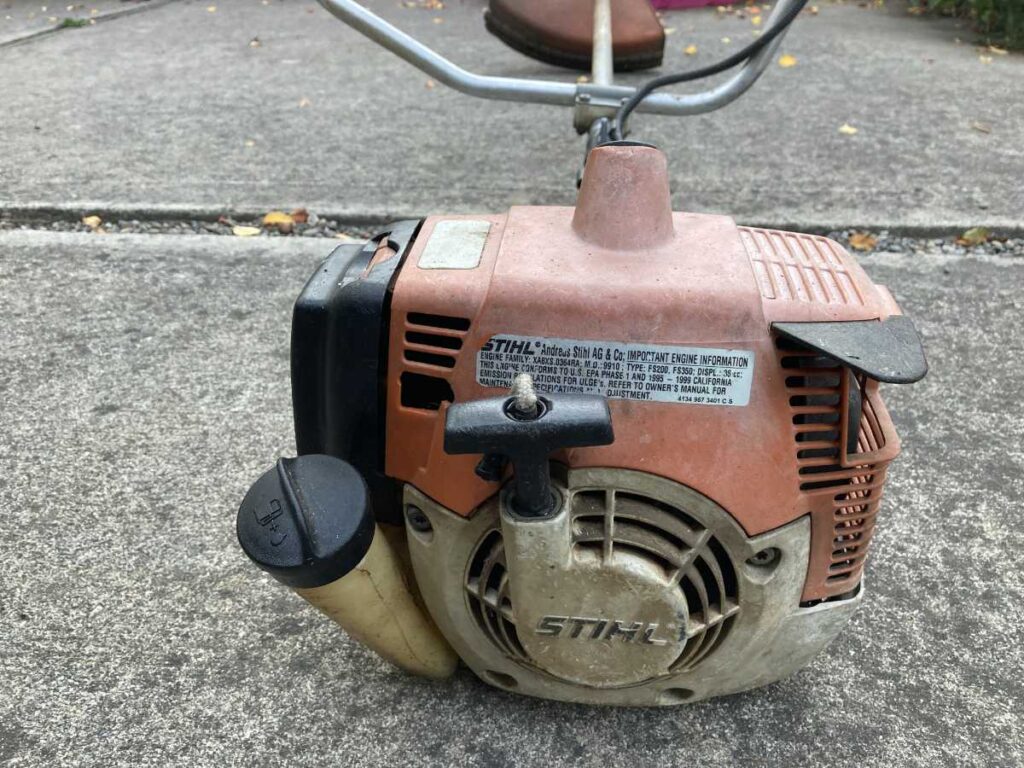
Item The Issue The Fix Parts Cost Stihl FS200 Trimmer Scored piston/cylinder Full Top-End Rebuild $30 Echo Leaf Blower Gummed carb & lines Carburetor Kit $16 Reel Mower Missing roller bracket New OEM Bracket $9
Total Investment: $85 | Estimated Value: $350+
By spending $85, I added three machines to my business arsenal that would have cost nearly $600 new.
The “Clean vs. Replace” Carburetor Debate
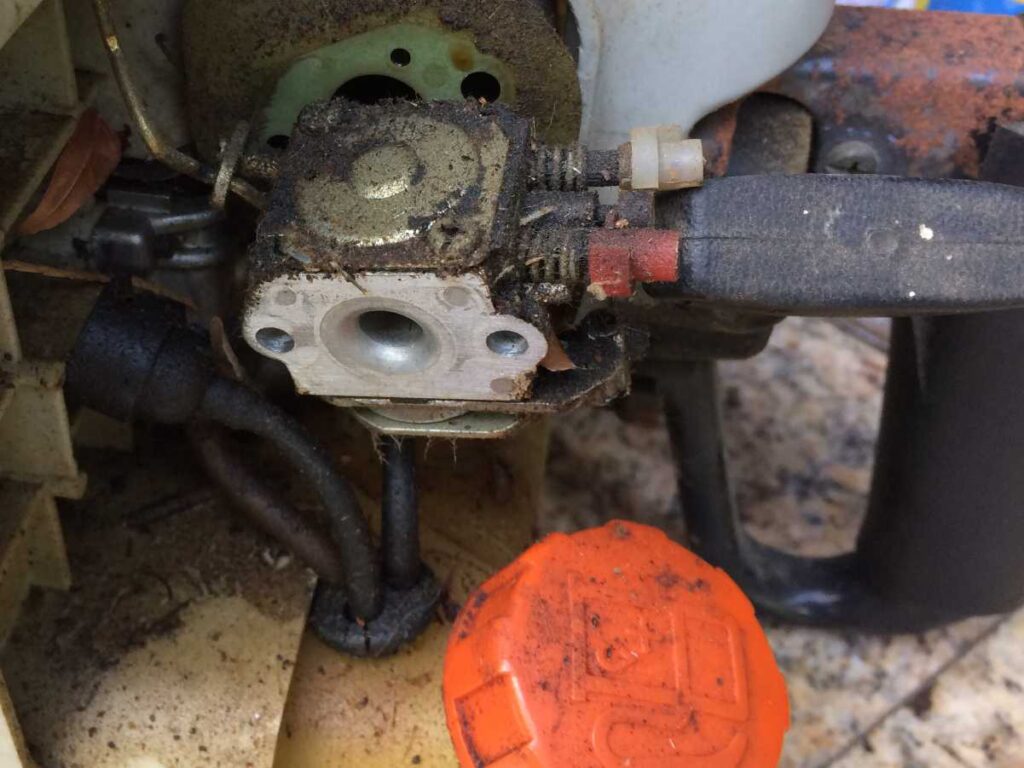
When I opened up the Echo blower, the carburetor was completely gummed up with varnish. A lot of people ask: “Why not just clean it?” In my experience, especially with Echo and Stihl units, it is almost always better to replace the carburetor than to clean it.
A high-quality aftermarket carb kit costs around $16 and usually includes the fuel lines, primer bulb, spark plug, and air filter. If you spend two hours cleaning a carb only to find the internal diaphragms are still stiff, you’ve wasted your weekend. For $16, you get a “factory-fresh” start and the peace of mind that the tool will start on the first pull when you’re actually out on a job.
Time is money in my business, and a $16 kit is cheaper than a wasted afternoon.
Deep Dive: Rescuing the Stihl FS200
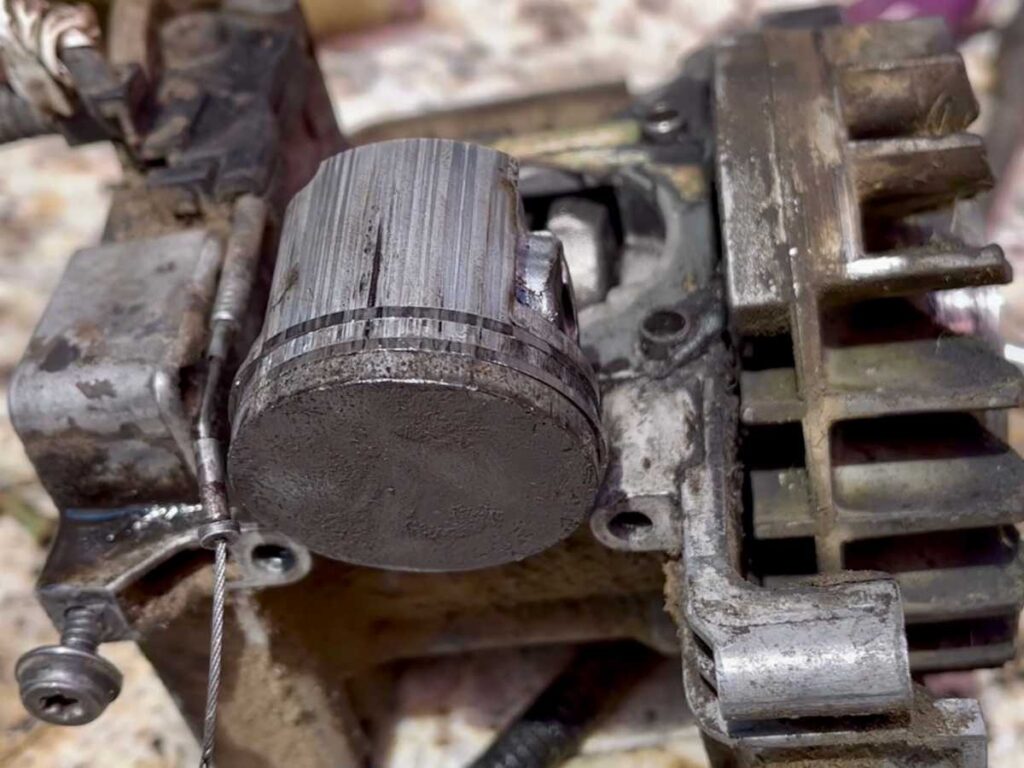
The FS200 was the biggest challenge in the bundle. It had low compression, which I felt immediately during the “cord pull” test. After breaking it down, I discovered a scored piston and cylinder.
Most people see a scored piston and think the engine is “blown.” However, a $22 cylinder and piston kit can bring these high-torque engines back to life. The key is to check the crankcase for debris before installing the new “top end.” Once rebuilt, this FS200 regained its factory compression and has become a primary workhorse in my equipment lineup.
The 60-Second “Walk Away” Checklist
To keep your budget intact, you have to know when a deal is actually a disaster. Perform these three checks before buying:
- The “Ghost Pull”: Pull the starter cord. If it pulls out with zero resistance, the piston rings are likely fried. Unless you’re ready for a full rebuild like my Stihl project, walk away.
- The Varnish Sniff Test: Open the gas cap. If it smells like heavy turpentine or old paint, the fuel has “turned.” This is a guaranteed carb swap.
- The Melted Plastic Check: Look at the cooling fins. If the plastic shroud is warped or melted, the engine was run “lean” (not enough oil in the mix) and overheated. These are rarely worth the time.
Conclusion
Building a high-end tool arsenal is about patience and knowing the math. By focusing on quality brands like Stihl and Echo, you’re investing in machines that were designed to be repaired, not thrown away. These three tools have already paid for themselves ten times over in my daily business.