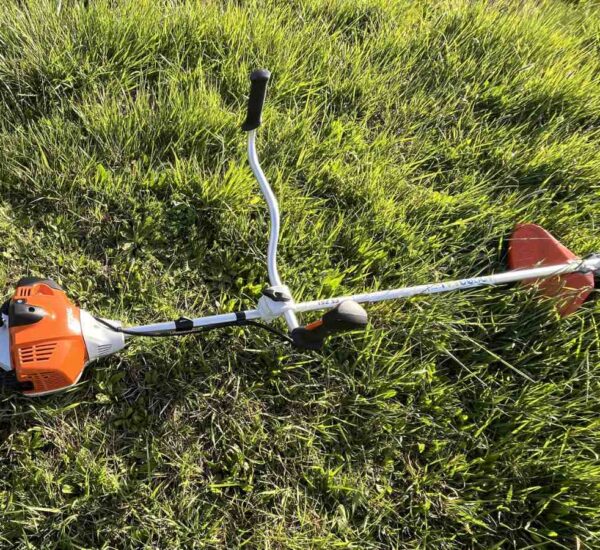
I have always been a fan of tools that were built to last, the kind of gear that doesn’t just end up in a landfill because a single plastic clip snapped. A few years ago, I came across a Stihl FS 200 brushcutter that had seen much better days. It was grimy, wouldn’t start, and the previous owner had basically written it off. I took a gamble and picked it up for $30.
At the time, I was running a small business and needed something with serious “grunt” to handle overgrown properties. I wasn’t looking for a shiny new model from a big-box store; I needed a professional-grade workhorse that could handle hours of clearing without bogging down. Years later, this machine is still a staple in my equipment trailer. If you are scouring local listings wondering if this older model can still keep up with the modern fleet, the answer is a resounding yes.
The $30 Gamble: Bringing a Legend Back to Life
When I bought this unit for the price of a decent lunch, I knew I was in for some workbench time. The FS 200 belongs to a generation of Stihl tools designed for professional landscapers. These were meant to be rebuilt, not replaced.
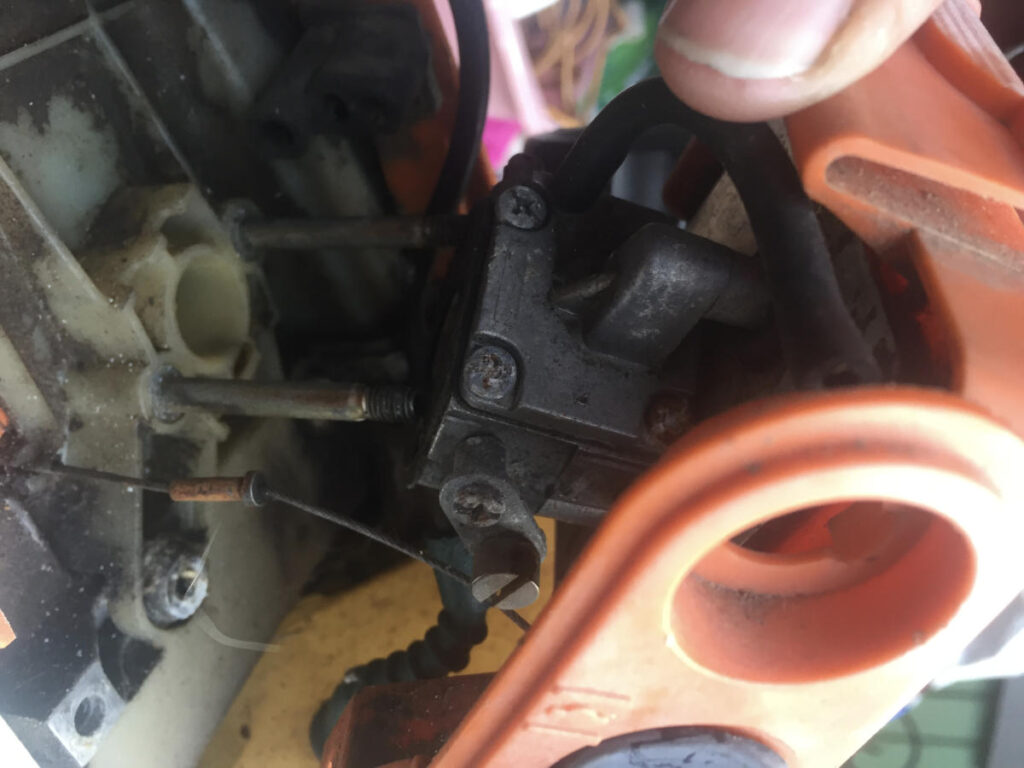
I spent a Saturday doing the necessary repairs myself. I swapped the fuel lines, replaced the spark plug, and gave the carburetor a thorough cleaning.
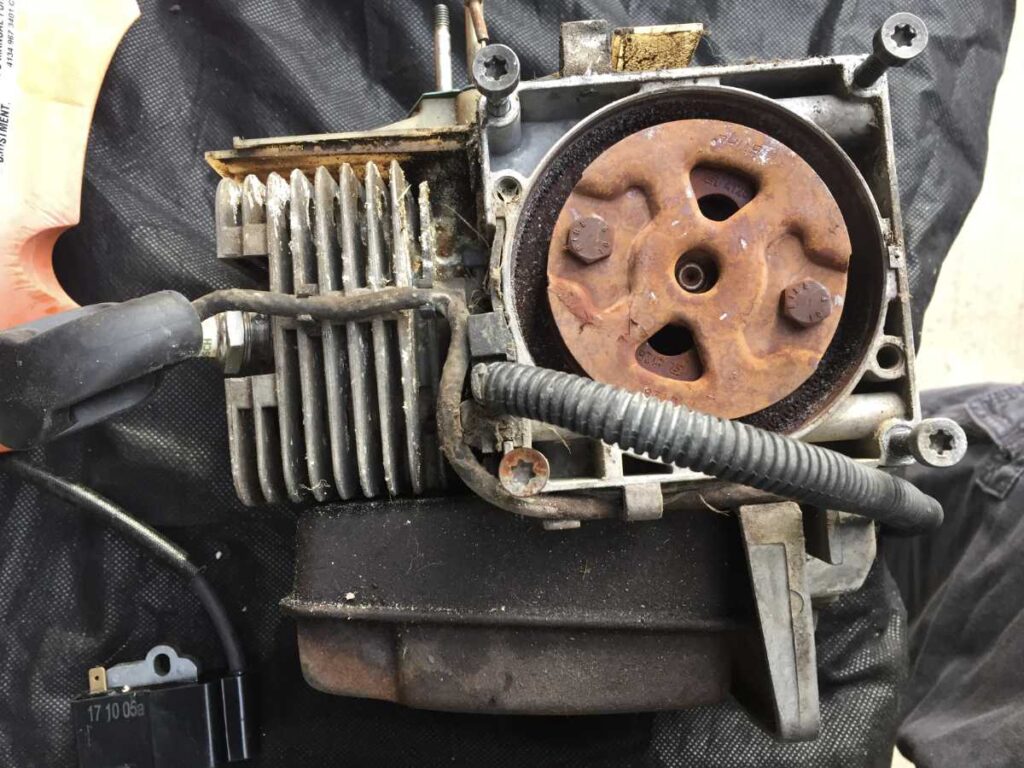
I was able to find all the parts I needed easily, and I’ve put a link below to the specific kits I used. If you find one of these for a steal, I highly recommend a quick “refresh” to get it back to factory standards.
Check the current price of parts on Amazon
Power Specs: Why the FS 200 Still Punches Hard
Don’t let the age of this machine fool you. The FS 200 features a 36.3 cc engine that puts out roughly 2.1 horsepower. In the world of string trimmers and brushcutters, that is a significant amount of power.
When you compare this to many modern homeowner models that hover around the 21 cc to 25 cc range, the difference is night and day. This isn’t just a weed eater: it is a true brushcutter. It has the torque to spin heavy cord or even metal blades through thick, woody stalks without the engine struggling.
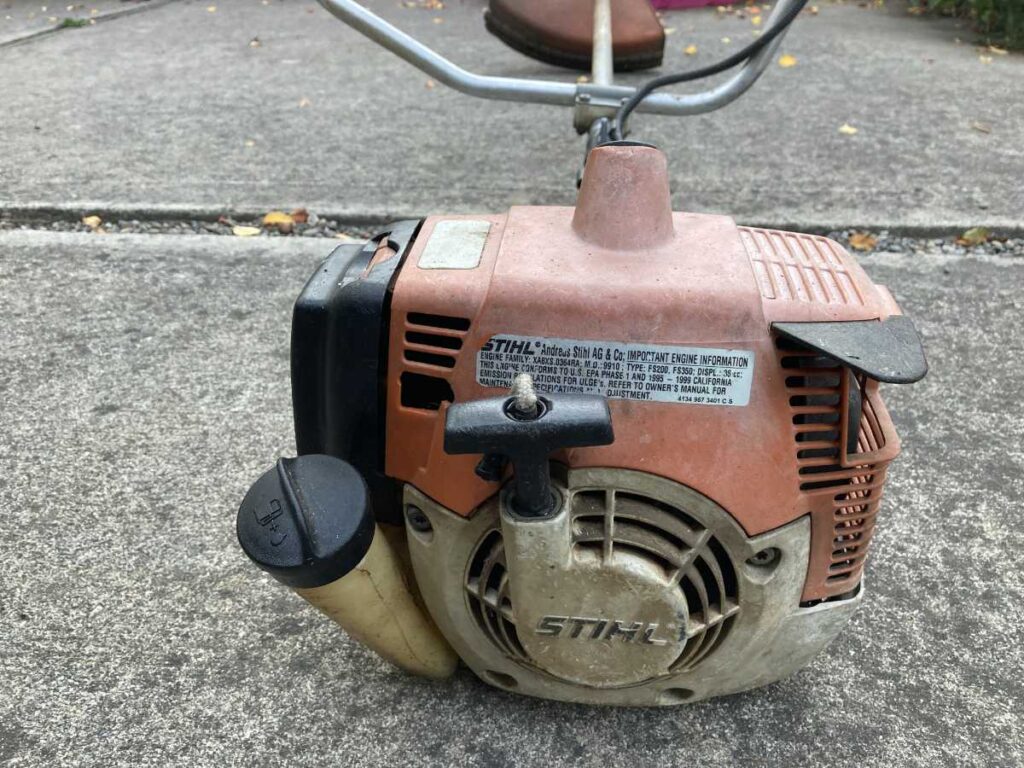
- Displacement: 36.3 cc
- Power Output: 1.6 kW (2.1 bhp)
- Weight: Approximately 13.9 lbs
- Fuel Capacity: 0.81 Liters (about 27.4 oz)
The fuel tank capacity is a major plus for me. At nearly 28 ounces, you can get a massive amount of work done before needing to refuel. While it might be a bit “thirstier” than the newer 4-MIX engines, the trade-off is a simpler engine design with fewer moving parts to fail. It’s a pure two-stroke beast.
FS 120 vs FS 200 vs FS 250: What’s the difference?
FS 120: 30.8cc (Great for thick grass and light brush)
FS 200: 36.3cc (My model — the perfect mid-range workhorse)
FS 250: 40.2cc (The heavy-hitter for saplings and woody brush)
Seeing it in Action
I personally find it easier to judge a tool when I can hear the engine and see the throttle response. I put together a video showing exactly how this $30 investment handles a heavy workload in the field. You can see the clearing power for yourself right here:
Ergonomics and Real-World Reliability
The FS 200 was built for guys who spend eight hours a day with a trimmer in their hands. The “bike handle” bars (or “U-handles”) allow for a natural sweeping motion that saves your back and shoulders.
Once I performed those initial DIY repairs, the reliability has been incredible. It has been a “first or second pull” starter every single time. The anti-vibration system, while an older design, still does a fantastic job of keeping your hands from going numb after a long afternoon of work.
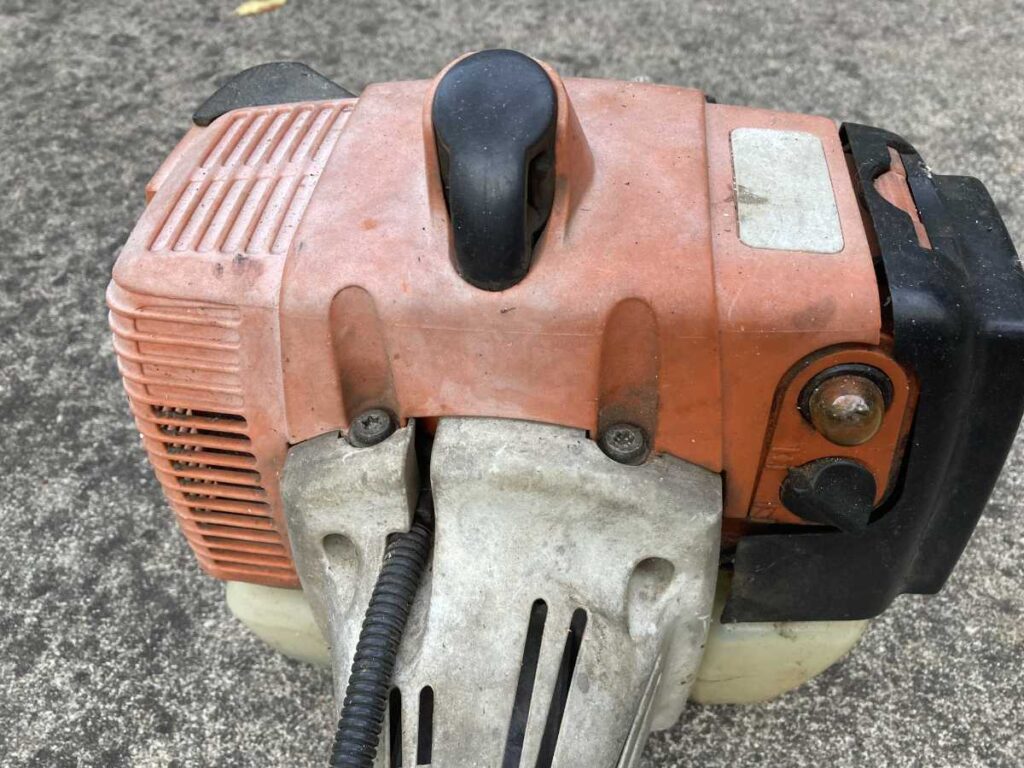
The controls are simple and tactile. You have a sliding switch for the ignition and a standard primer bulb that makes cold starts predictable.
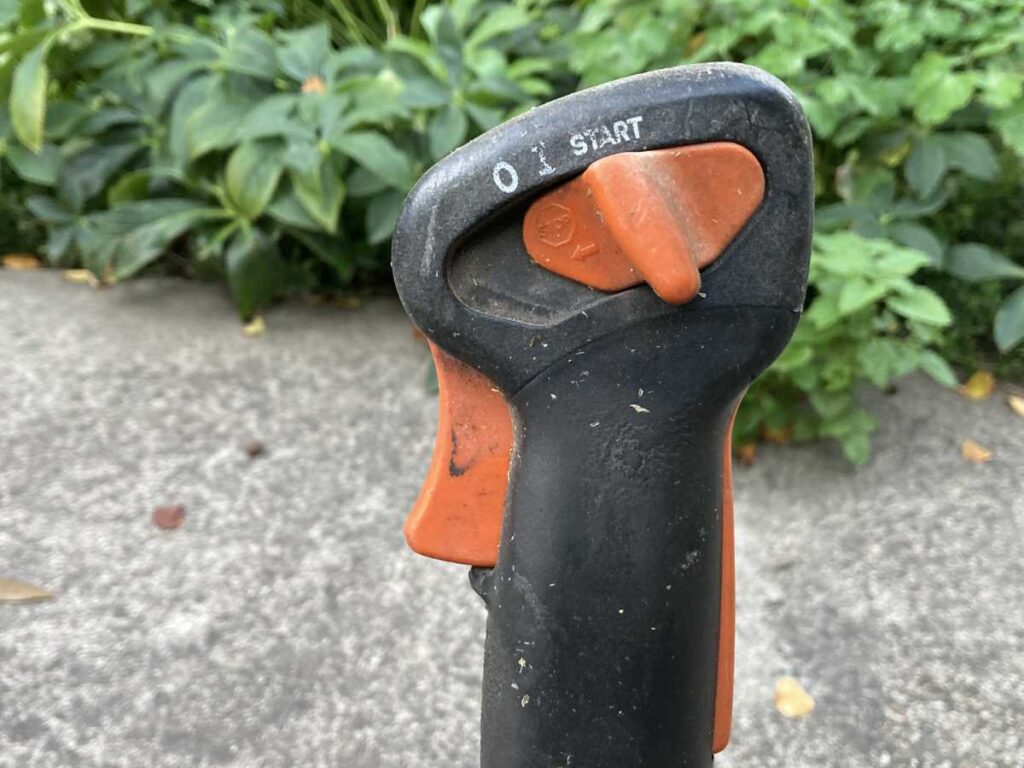
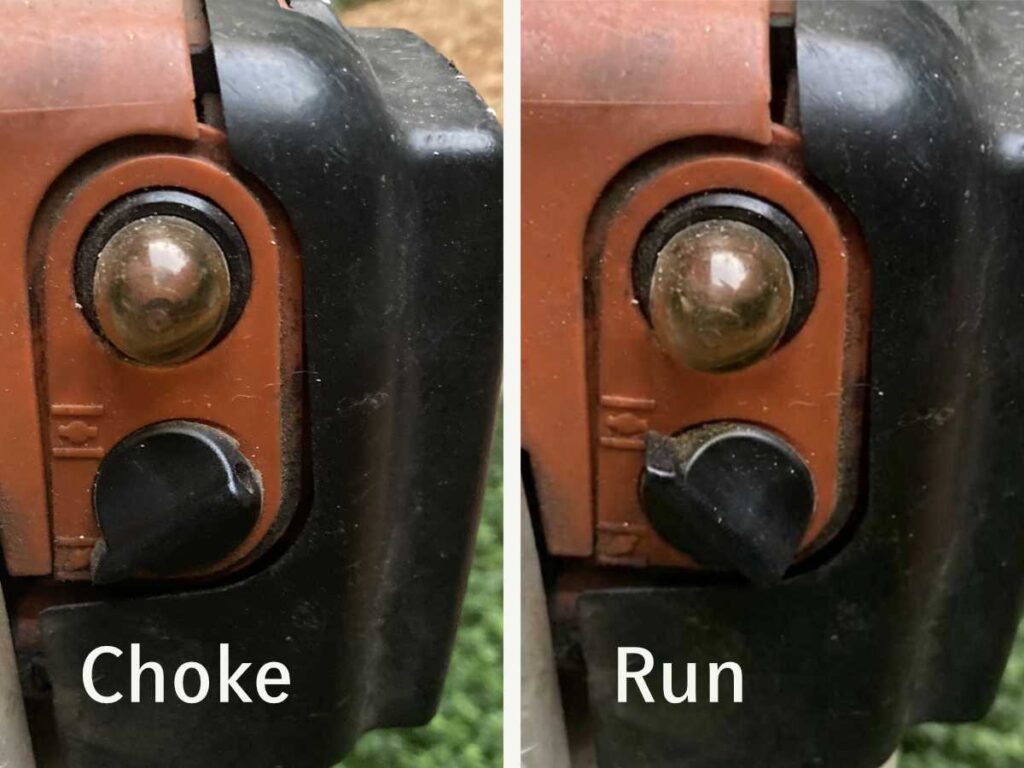
Understanding these settings is key to the machine’s longevity. A well-maintained engine that isn’t forced to run on a half-choke will last you decades. I always make sure to use high-quality 50:1 fuel mix and keep the air filter clean. These small maintenance steps allow a twenty-year-old machine to outwork a brand-new budget model any day of the week.
Should You Buy One?
If you are looking at a used FS 200, you have to be honest about your mechanical skills. If you enjoy tinkering and don’t mind a little grease under your fingernails, buying a “project” unit like mine is a fantastic way to get pro-level gear for pennies.
However, if you aren’t comfortable with small engine repair, I strongly encourage you to look for a “running” version. Even at current market prices for a used, well-maintained unit, you are getting a machine that was built to a higher standard than almost anything you’ll find in a department store today.
Final Thoughts
So, is the Stihl FS 200 still worth it? Absolutely.
In an era of “disposable” tools, the FS 200 is a survivor. It offers professional power, a tank-like build quality, and the satisfaction of using a tool that actually rewards you for taking care of it. Whether you are clearing a neglected back acre or starting your own landscaping side-hustle, this is one piece of gear that won’t let you down.
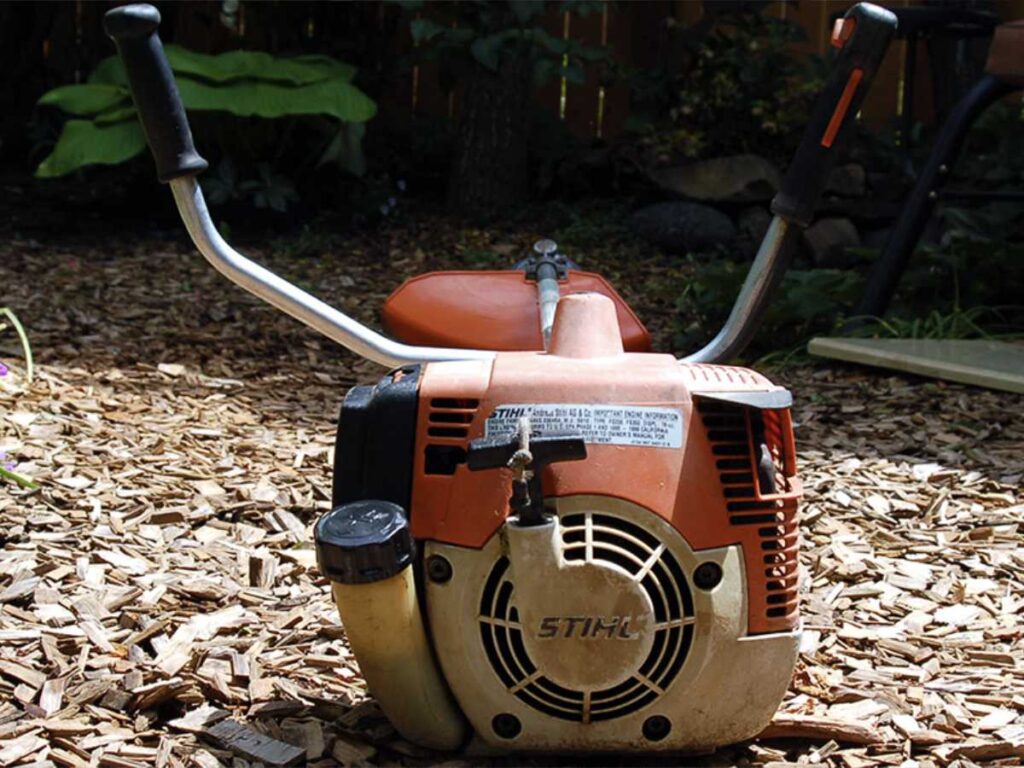
If you want the exact balance of weight and power I show in the video, look for the FS 200. If you need even more power for clearing small trees, hunt for an FS 250.