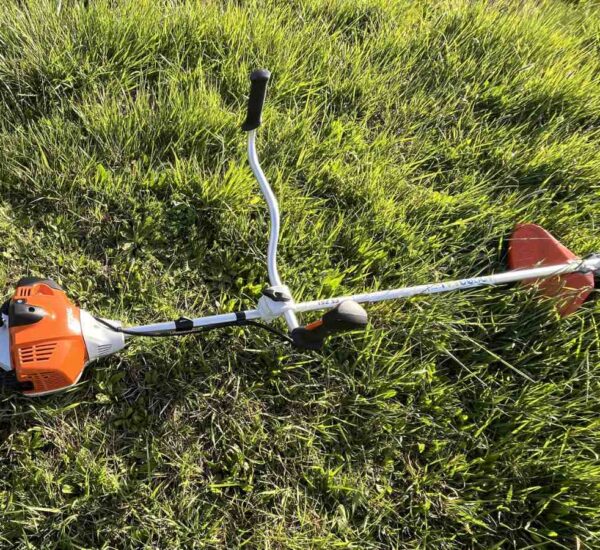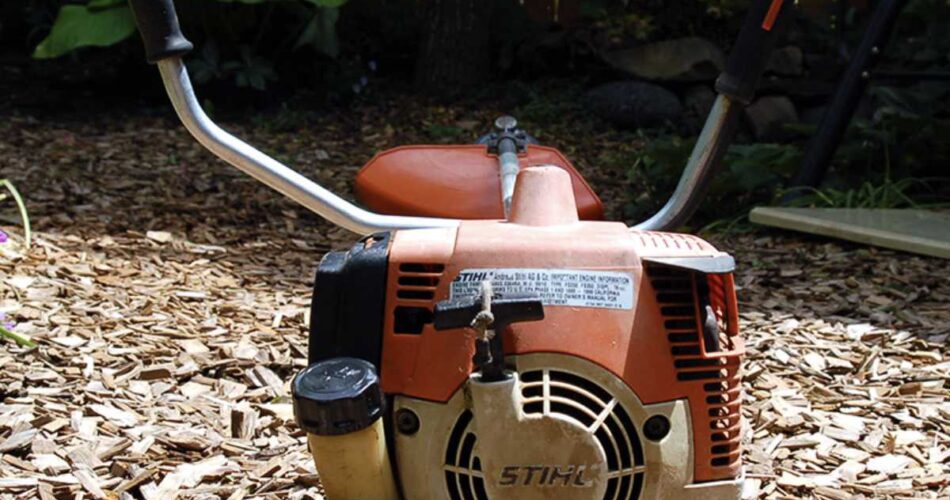
If your Stihl brushcutter is bogging down when you hit the gas or stalling out while idling, it’s likely just a carburetor tweak away from running like new. I’ve put my Stihl FS 200 through plenty of work, and I’ve found that these professional-grade machines just need a “reset” every now and then to handle different temperatures or fuel types.
While I’m using my own FS 200 for the photos in this guide, the steps and the carb layout are identical for the FS 120, 250, and 300 models.
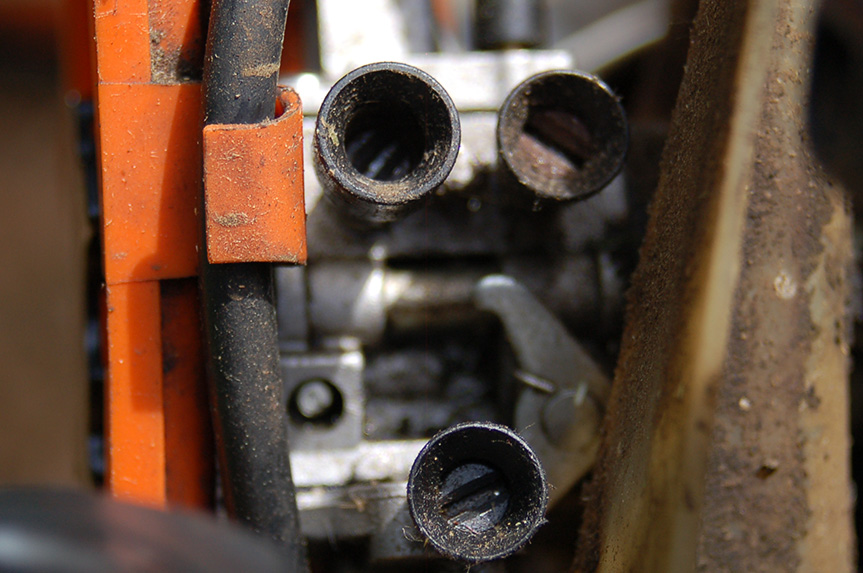
Note on Location: You can access the carburetor body through the small holes in the housing located directly under the air filter cover. Looking at the holes, the bottom screw is LA (Idle Speed), the top left is L (Low Speed), and the top right is H (High Speed).
Tools Needed
- Small Flat-Head Screwdriver: A standard thin-blade driver is all you need to reach the adjustment screws through the shroud.
- Tachometer (Optional): If you want to be precise, I recommend a tachometer to stay under the factory-safe limit of 12,500 RPM.
- A Clean Rag: I always wipe the engine shroud first so I don’t poke dirt into the adjustment holes.
My Pre-Adjustment Checklist
Before I touch the carb, I make sure the engine is physically ready for a tune. A clogged filter will trick you into setting the carb wrong.
- Clean the Air Filter: Wash it or swap it out if it’s packed with dust.
- Check the Spark Plug: If the tip is black or oily, replace it first.
- Check the Spark Arrestor: If the tiny screen in your muffler is clogged with soot, the engine won’t “breathe” properly no matter how you tune it.
- Warm Up the Engine: Always run the machine for 3–5 minutes first. You can’t get an accurate tune on a cold engine.
The “Standard Setting” (Factory Reset)
If my trimmer is acting up or won’t start, I go back to these baseline settings:
- High Speed Screw (H): Turn clockwise until seated, then back out 1 full turn.
- Low Speed Screw (L): Turn clockwise until seated, then back out 1 full turn. Note: Be gentle—don’t force the screws when seating them, or you’ll damage the carburetor needle.
The Adjustment Procedure
- Set the Idle (LA Screw): If the engine stalls at idle, turn the LA screw clockwise until it stays running. If the cutting head spins while you aren’t touching the trigger, back it off (counter-clockwise) until it stops.
- Fine-Tune the Low Speed (L): Slowly turn the L screw clockwise until the RPMs drop, then back it out 1/4 turn. This prevents that “bogging” feeling when you pull the trigger.
- Set the High Speed (H): Hold the throttle wide open. Turn the H screw until the engine sounds crisp and powerful. Safety Tip: If it starts to “scream” at a very high pitch, it’s too lean. Back it out counter-clockwise immediately to avoid overheating.
Replacement Parts & Maintenance Kits
If an adjustment doesn’t fix the problem, you might have a cracked fuel line or a dirty filter. When I’m not buying from a dealer, I use aftermarket tune-up kits.
These are non-original (non-OEM) parts, but they are a great, budget-friendly way to get all your maintenance items in one go.
- Full Aftermarket Carburetor Kit: These general kits usually include a new carburetor, gaskets, a primer bulb, and fuel lines. It’s a complete “reset” for your fuel system at a fraction of the dealer price.
- Basic Maintenance Kit: If your carburetor is fine, I recommend a basic kit that includes an air filter, fuel filter, and a fresh spark plug to keep the engine breathing right.
Watch the Walkthrough
If you want to see exactly what comes in these aftermarket kits and how I install them, check out my video:
Stihl Maintenance Kit: Is the Amazon Kit Worth It?