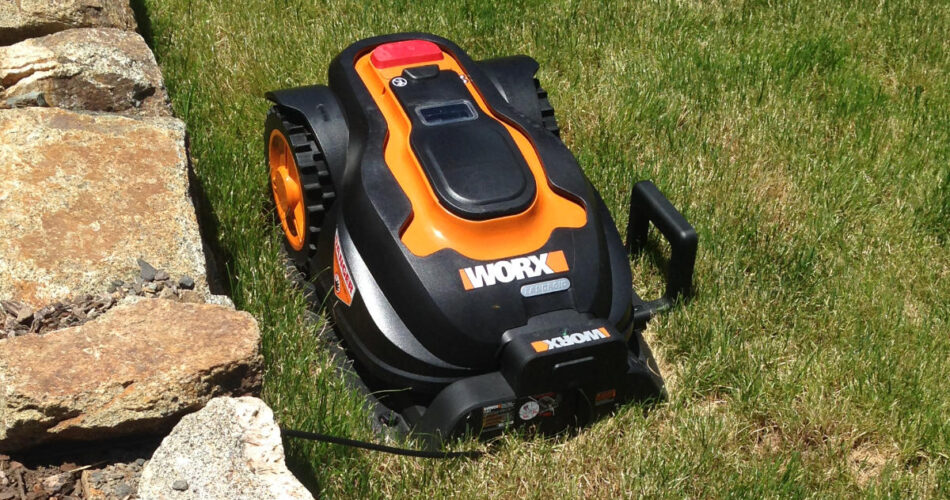
When I first started out doing general yard work, I was out there mowing several times a week. I worked hard to keep yards looking sharp for my customers depending on their needs. Years ago, I had the chance to install a Worx Landroid for a client. I was curious to see if a droid could really replace the manual labor I was used to doing.
I actually recorded a demo of the unit in action which you can see here:
As you can see in the video, the mower navigates the yard on its own. However, the actual work behind the scenes to get it to that point was much more intense. After watching it perform over the years, I see a big difference between the marketing and the reality of owning one.
Is it a Tool or a Novelty?
I now view the Landroid more as a novelty than a professional tool. In my personal opinion, the blades are just too small. Most traditional mowers have a large single blade. These blades create suction to pull the grass up before cutting it. The Landroid uses three tiny razor blades on a spinning disk. They just graze the surface. This is why the mower must run almost every day to keep up with the growth.
Check the current price and specs for the Worx Landroid on Amazon
There is also the question of productivity. I find a lot of satisfaction in finishing a lawn quickly. Watching a robotic mower wander around like a vacuum cleaner is the opposite of that. It is a slow process. You could finish the yard much faster with a push mower. You would feel much more productive when you are done.
The Reality of the Setup Process
The instructions do not say how tedious the setup truly is. I spent a long time pinning down the boundary wire. This wire acts as a guide for the mower. You must manually place every stake to mark the perimeter.
One professional tip is to use the cardboard ruler religiously. If the wire is 26cm from a wall, it stays on track. If you are off by a few centimeters, the mower will bump the edge. It will get stuck constantly. This is the part of the process most people skip over until they realize the mower is not working right.
I also had to mow the customer’s lawn myself before the installation. The grass was way too high for the Landroid. These machines are not built for overgrown yards. They are meant to maintain short grass. If the lawn grows too long, you will need your old mower anyway.
2026 Update: Wire vs. Vision Models
By now, you may have seen the newer Vision mowers. They claim you do not need a boundary wire. My experience with the original Landroid taught me something important. Wire based systems are actually more reliable in certain yards. They work better under heavy shadows or thick tree cover. Cameras on the new models can get confused in those spots. If you have a standard yard, the classic Landroid is a stable choice. It is often more affordable than the newer AI tech.
If you own one, check the copper charging pins on the side. They can oxidize over time. This makes the mower think it is not docked. Rub them with fine grit sandpaper once a year. This keeps the connection solid and prevents errors. It is a small fix that saves a lot of headaches.
Security and Long-Term Value
I still feel uneasy leaving expensive equipment in a front yard. These units have alarms and GPS tracking. However, it still feels like a target sitting out there. You are leaving a high priced gadget unattended. GPS cannot prevent the frustration of someone messing with it.
When you factor in the cost and the maintenance, there is a better way. Hiring a service or doing it yourself is often cheaper. It is also more effective. The Landroid is a cool idea if you just want to watch. For anyone who values a professional cut, the traditional way still wins.