I’ve been spinning wrenches on 2 stroke engines for over 10 years now. Whether it’s a chainsaw that won’t bite or a weed eater that’s lost its punch, I’ve seen it all. Over the years, you start to develop a feel for these machines. You can almost hear the problem before you even take the shroud off.
I’m writing this for those of you just getting started. When you’re in the middle of a job and your equipment dies, losing compression sounds like a death sentence. The good news is that it isn’t always a total loss. Today, I’m going to walk you through the common causes of low compression and how to diagnose them even if you don’t have a fancy compression tester in your toolbox.
Watch: 4 Ways to Fix Your Small Engine
Sometimes it’s easier to see it than read it. I put together this video to show you exactly what I look for when an engine starts acting up. Watch this first to get a visual on the parts we’re talking about:
What Exactly Is Compression?
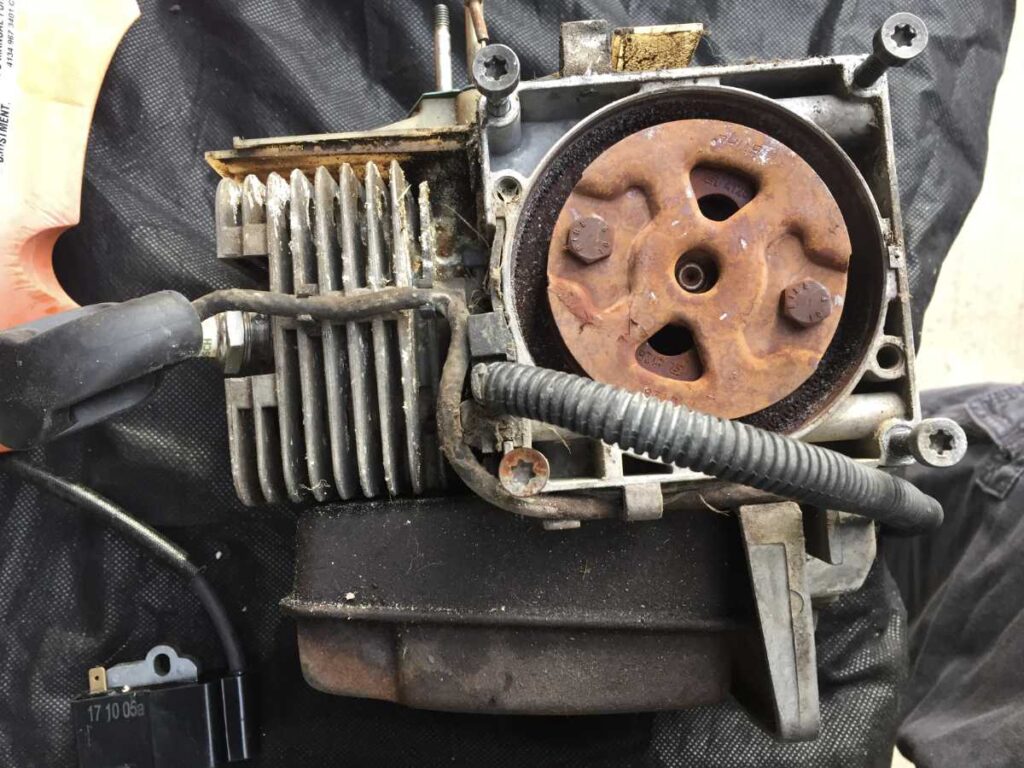
In a 2 stroke engine, compression is what happens when the piston moves upward, squeezing the air fuel mixture into a tiny space before the spark plug ignites it. If that squeeze isn’t tight enough, the engine won’t fire, or it will run with zero power.
Think of it like a bicycle pump. If the rubber seal inside is dried out, you can pump all day and never get air into the tire. Your engine works the same way.
Troubleshooting Without a Tester: The Pro Methods
Most manuals tell you to hook up a gauge and look for 90 to 100 PSI. That’s great if you’re a pro shop, but if you’re in your driveway on a Saturday, you need a different approach. Here are the two tricks I use to get a feel for the health of an engine.
1. The Starter Rope Drop Test
This is the quickest way to see if you’re even in the ballpark. Pick up your piece of equipment by the starter handle and let the weight of the machine hang.
If you have good compression, the machine should hang there or drop very slowly in steps as it fights the engine’s resistance. If you have low compression, the machine will zip straight to the ground or the rope will pull out with almost no resistance. This usually means you’ve got a leak.
2. The Finger Test
Remove the spark plug and place your thumb firmly over the hole. Pull the starter rope. A healthy engine should have enough pop to force your thumb off the hole. If it just feels like a light breeze, you aren’t making enough pressure to run.
Common Causes of Compression Loss
The Scored Piston (The Exhaust Port Hack)
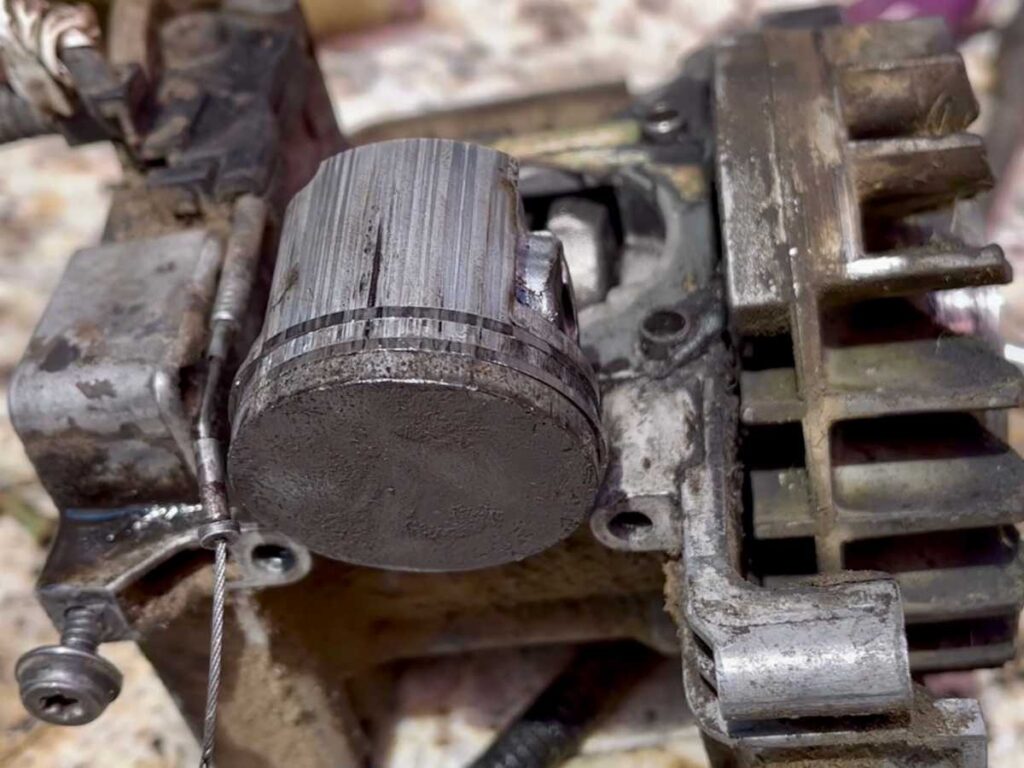
This is usually caused by straight gassing or running the engine too lean and hot. When there isn’t enough lubrication, the piston expands and scrapes against the cylinder walls.
The pro hack here is to not guess. Take the muffler off. It is usually just two bolts. Once it’s off, you can look right into the side of the engine. Pull the rope slowly. If that piston has vertical scratches and isn’t smooth and shiny, you’re losing compression through those gouges.
The 10 Dollar Fix: The Decompression Valve
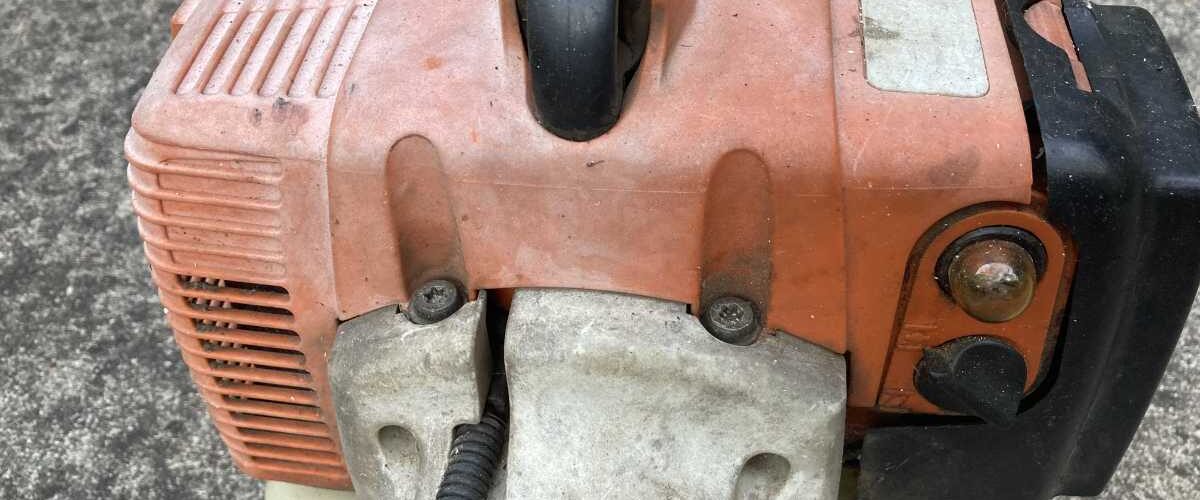
If you are working on a professional grade saw or blower, check for a decompression valve. This is the little button on top of the cylinder. These are designed to let air out to make starting easier. If that valve is gummed up with carbon or sawdust and gets stuck partially open, your compression is literally leaking out the top of the head. It’s a cheap fix that many people mistake for a dead engine.
Stuck or Worn Piston Rings
The rings create the seal against the cylinder wall. Over time, cheap oil or old gas creates carbon build up that pins the rings into their grooves. If they can’t spring outward to meet the wall, you lose your seal.
The Silent Killer: Crankcase Seals
A 2 stroke is a pressurized system. Compression doesn’t just happen above the piston; it starts in the crankcase. If the seals behind your flywheel or clutch are brittle or blown, the engine won’t breathe right. If you see oily grime built up behind your starter pulley, that’s a major red flag that your seals have failed.
The Wet Test (Is it the Rings?)
If you’ve determined the compression is low but you aren’t sure why, try this. Add about a teaspoon of 2 stroke oil directly into the spark plug hole. Give the engine a few slow pulls to spread it around, then try your Finger Test again.
If compression improves, your rings are worn or stuck because the oil is temporarily acting as a seal. If compression stays the same, you likely have a hole in the piston, a blown head gasket, or a leak in the crankcase.
Getting the Right Tools for the Job
While the “drop test” and “finger test” are great for a quick diagnosis in the field, sometimes you just want to know the exact numbers. If you’re planning on doing your own maintenance long-term, having a dedicated 2 stroke compression tester in your toolbox is one of the best investments you can make. It takes the guesswork out of the equation and tells you exactly how much life is left in your top end.
You can find the compression tester I recommend, along with the other shop tools and maintenance supplies I use to keep my gear running, right here: My Recommended 2-Stroke Maintenance Gear & Tools